Due to the prolonged wet start to the year, a considerable backlog of nature conservation tasks have accumulated. Most of these tasks are programmed to be undertaken to meet seasonal deadlines, so with nature offering no respite in this respect, we are finding it difficult to complete them in time. Such was the case with our work at Talbot Field nature area, in Hassocks. Normally clearance of spreading bramble and brush in the woodland and meadow, are undertaken in the winter months to prepare for the emergence of spring wild flowers. This year the wet weather completely foiled this intention, despite an odd day’s attendance in January and a second in February, no consistent work was able to commence until mid March. This meant that some wildflower growth had begun emerging making clearance in these areas not possible. Hopefully, next year we can tackle the increased growth before it establishes further into the progressive tangle it becomes when ‘looping and rooting’ occurs wherever a shoot touches the ground. We particularly find such increased growth extremely difficult when trying to manoeuvre the heavy ladder sections between trees housing the installed bat boxes in the late summer.
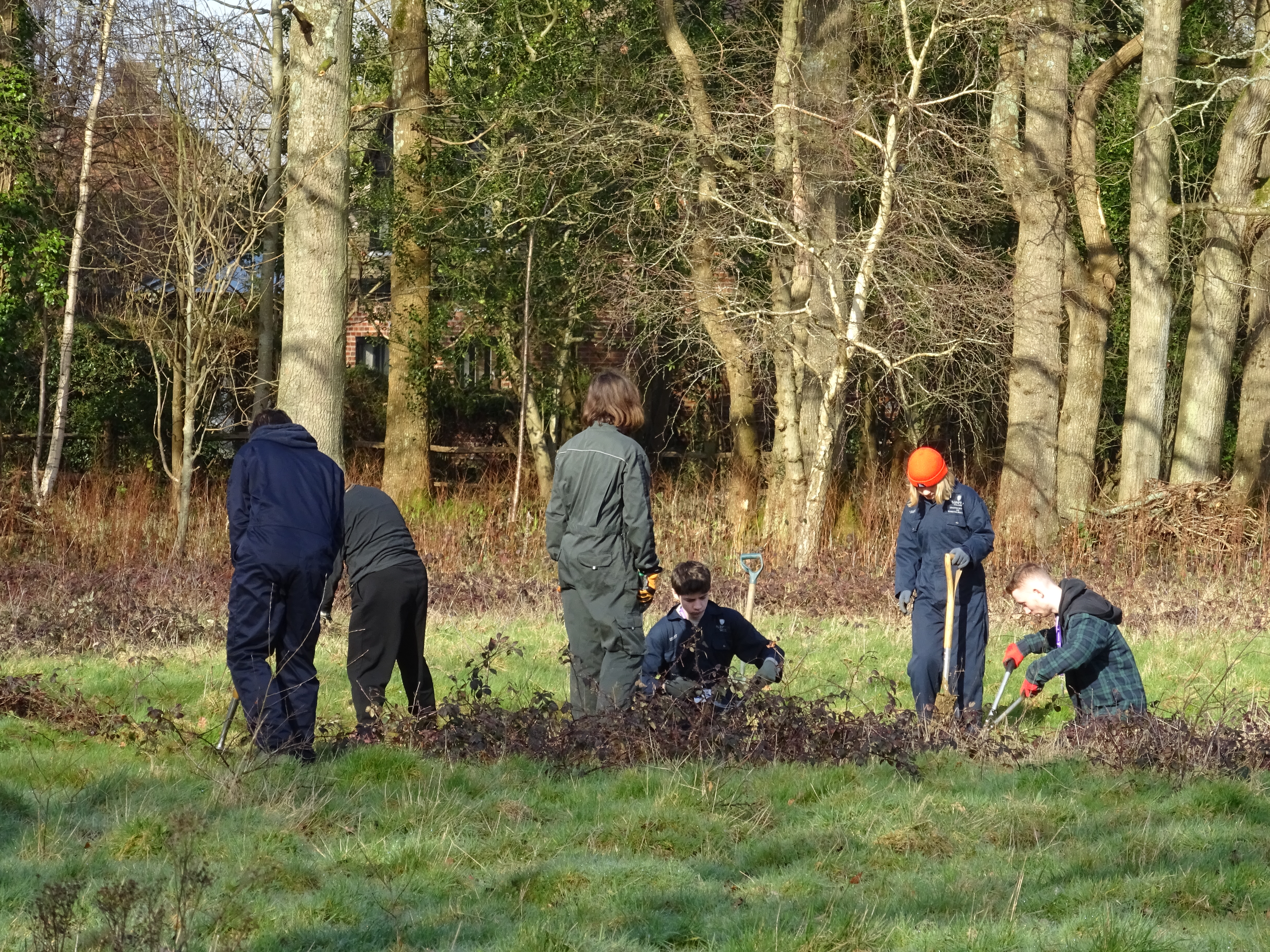 Helpers gather to tackle the bramble growth spreading from the woodland.
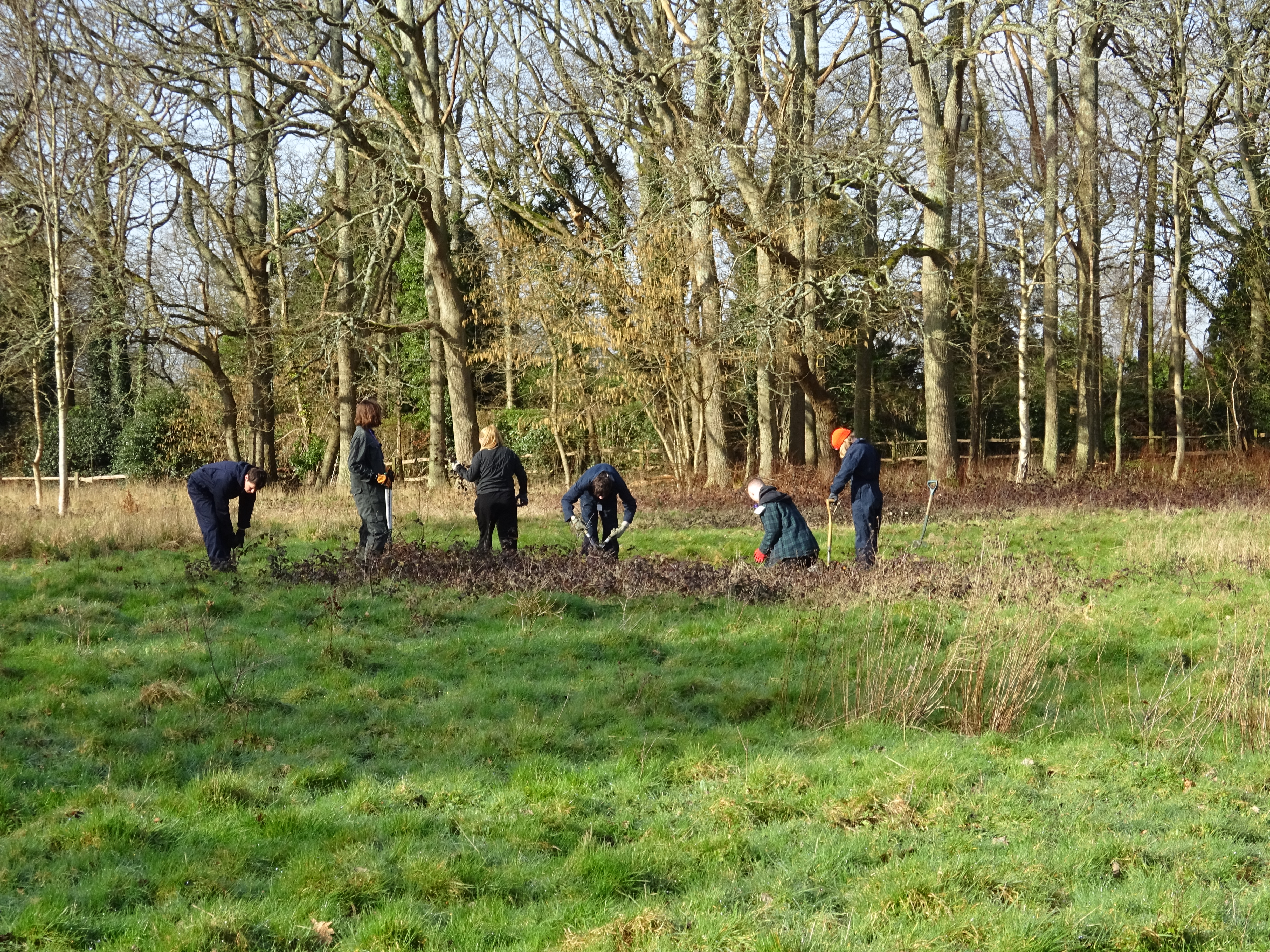 Unless all roots are removed from the meadow this incursion returns every year.
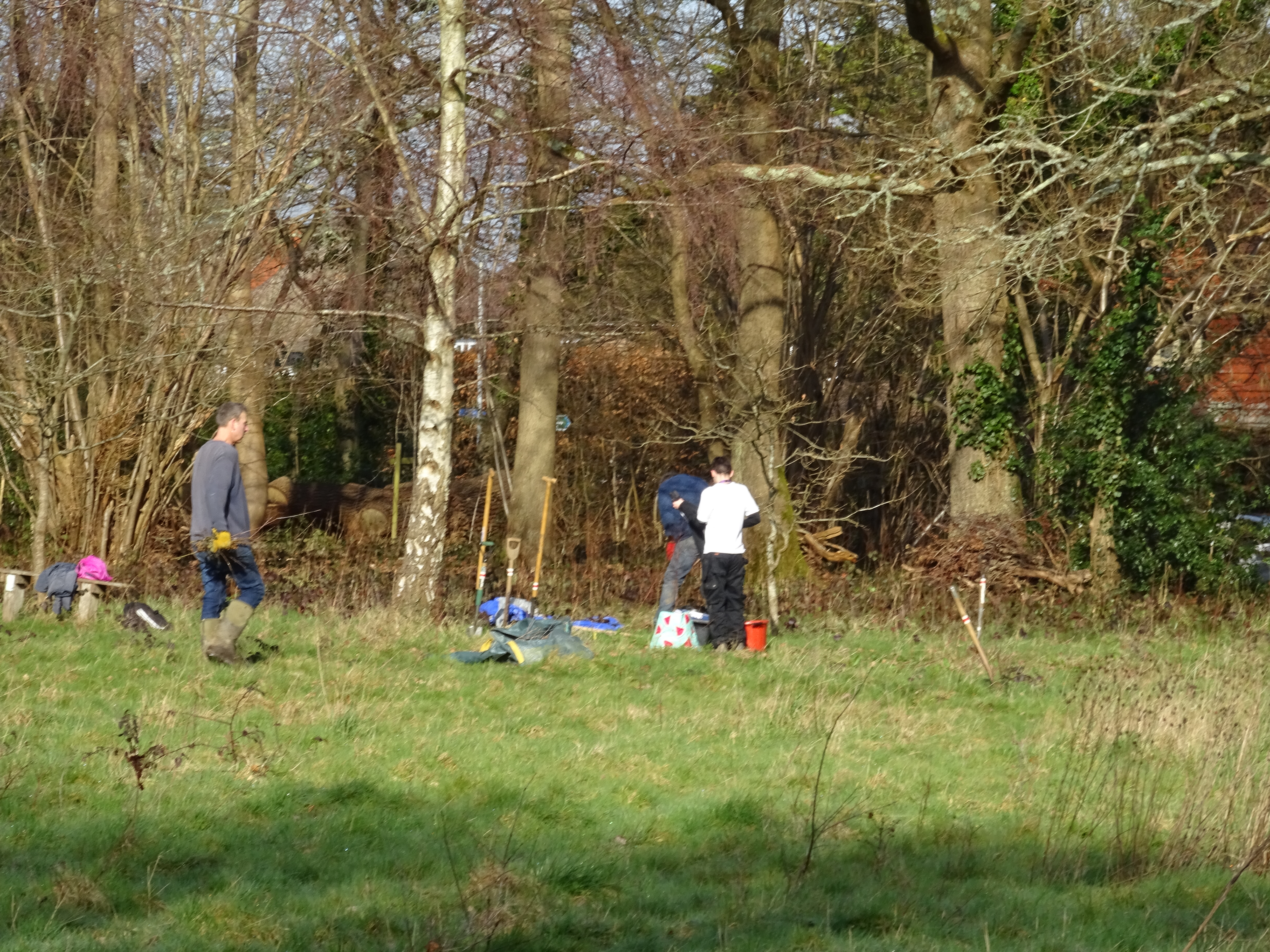
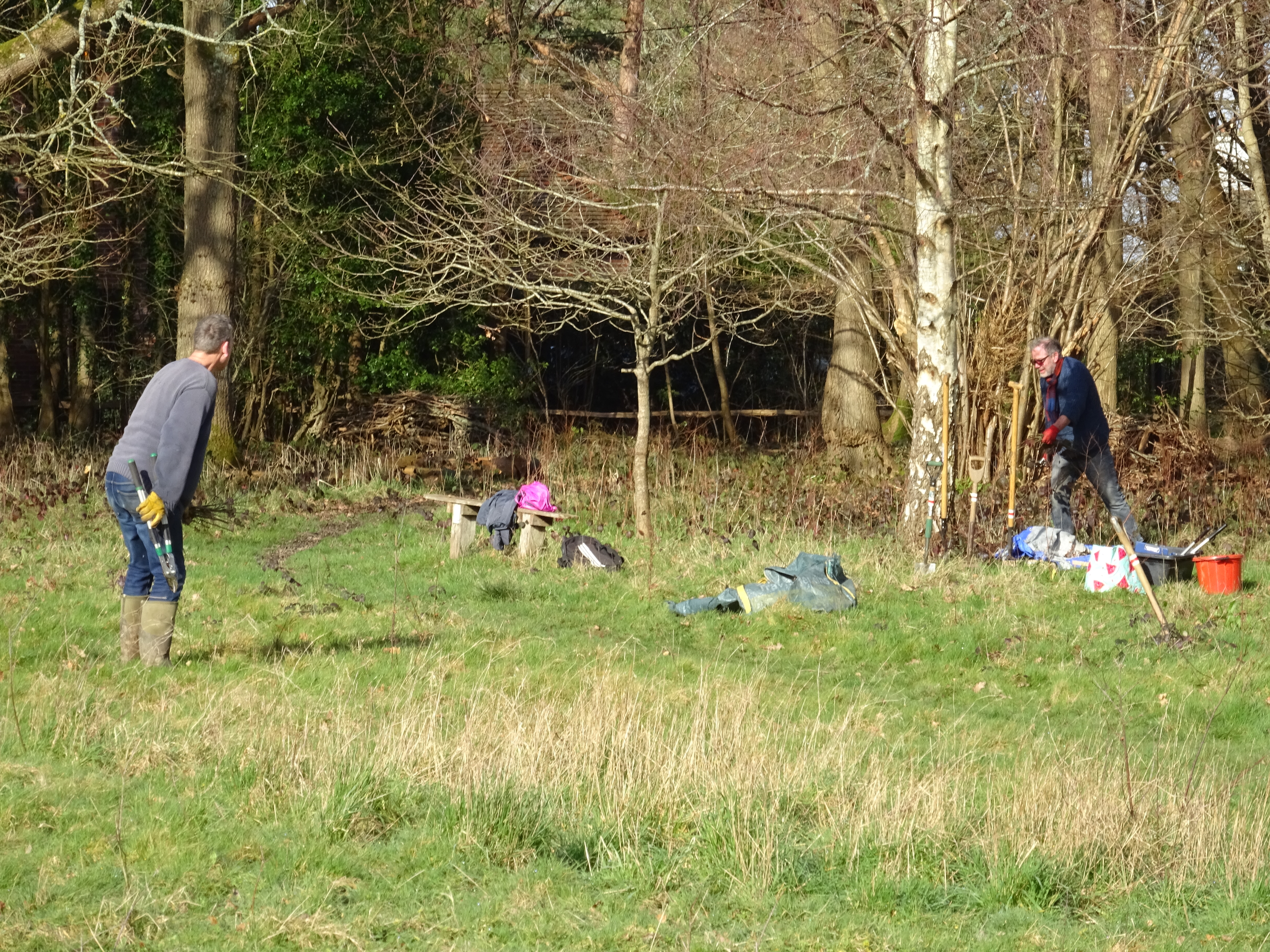 All debris from trees is collected and placed in woodland piles to encourage wildlife habitation.
 All woodland bramble spread into the meadow was tackled….
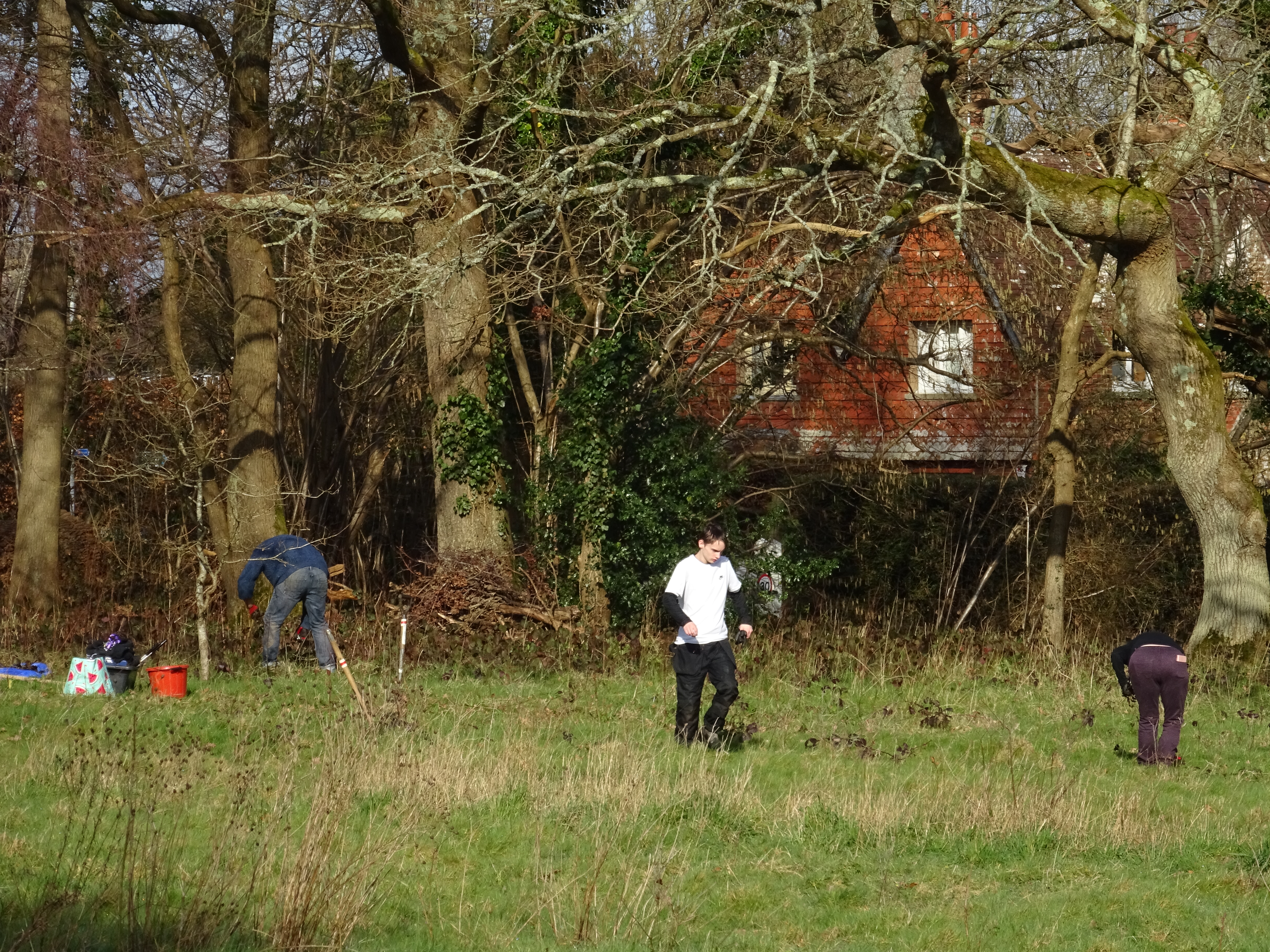 …. and the plants removed wherever possible.
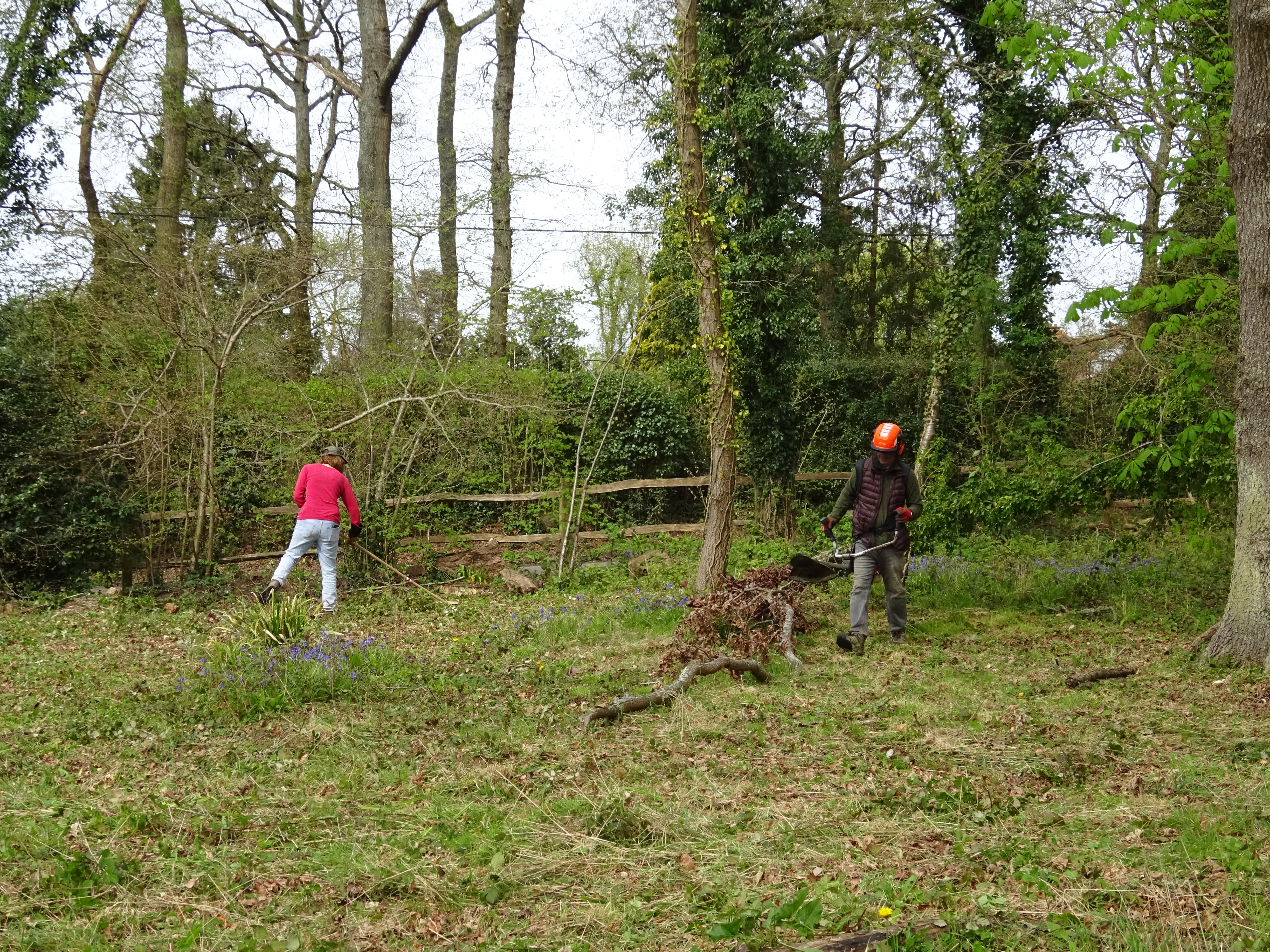 Within the wood, bramble was cut back in all areas where wildflowers were not present.
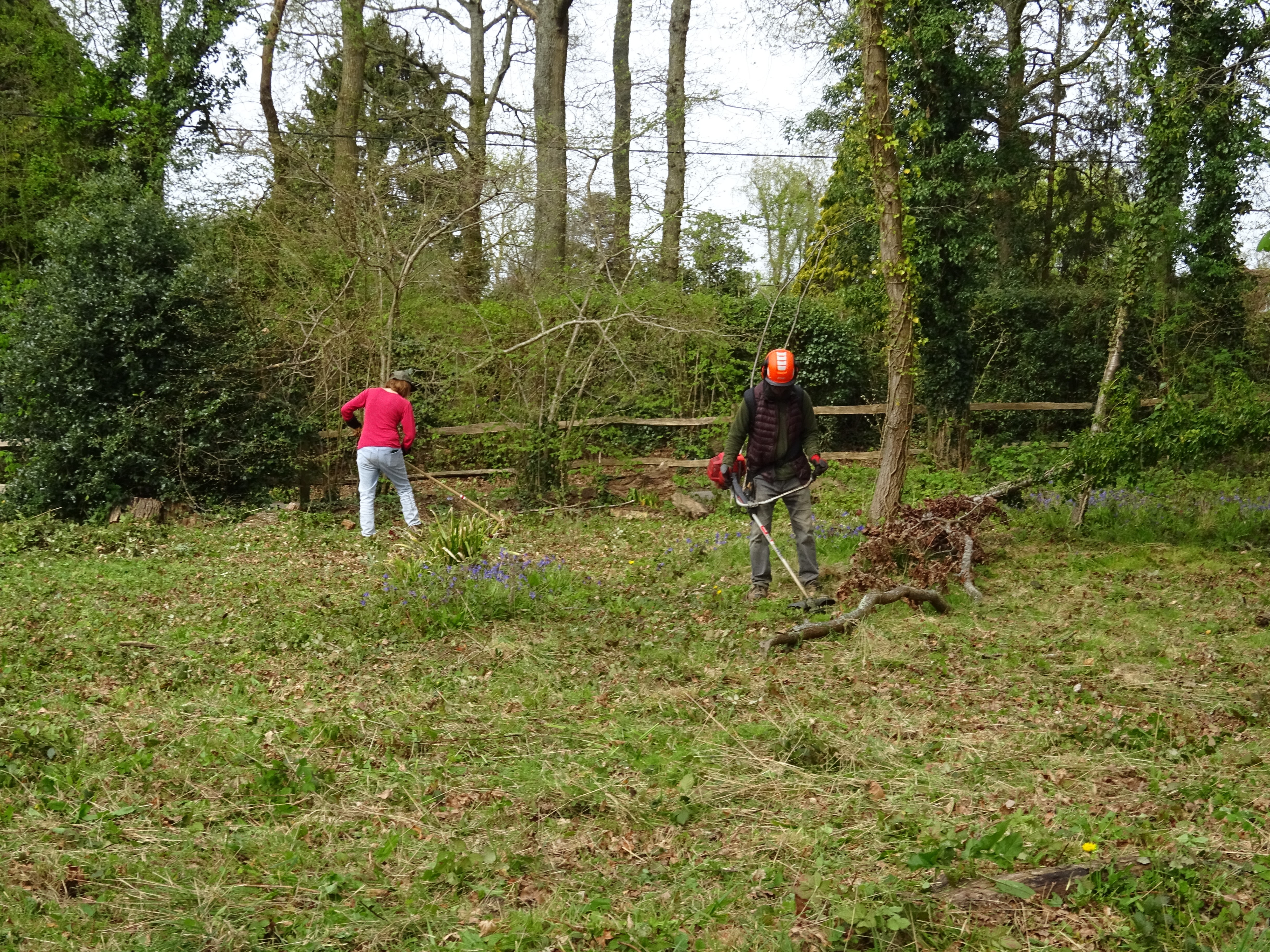 The more we were able to cut, the lower the regrowth that would re-appear as the summer progressed.
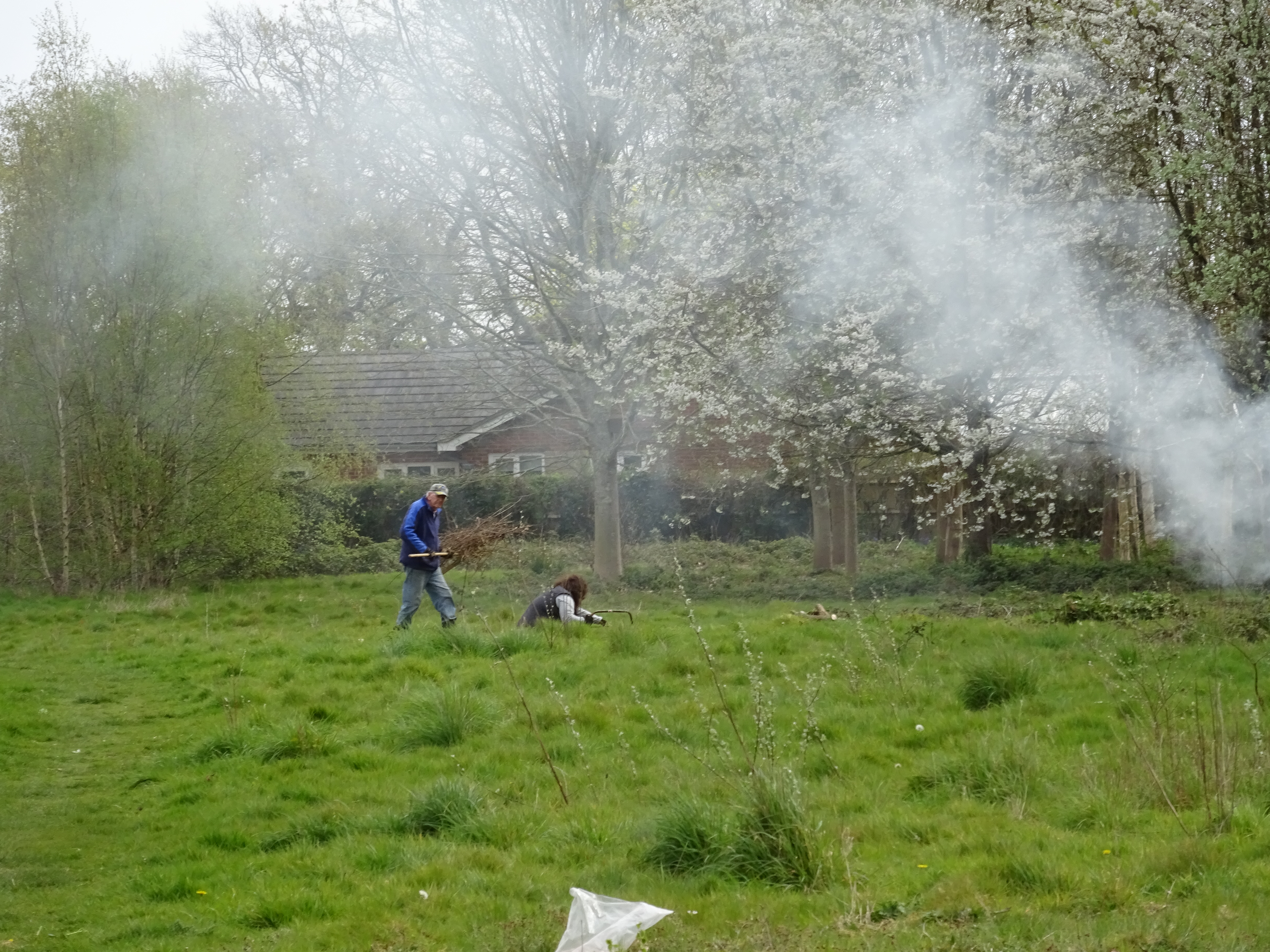 Throughout the site, similar operations were taking place.
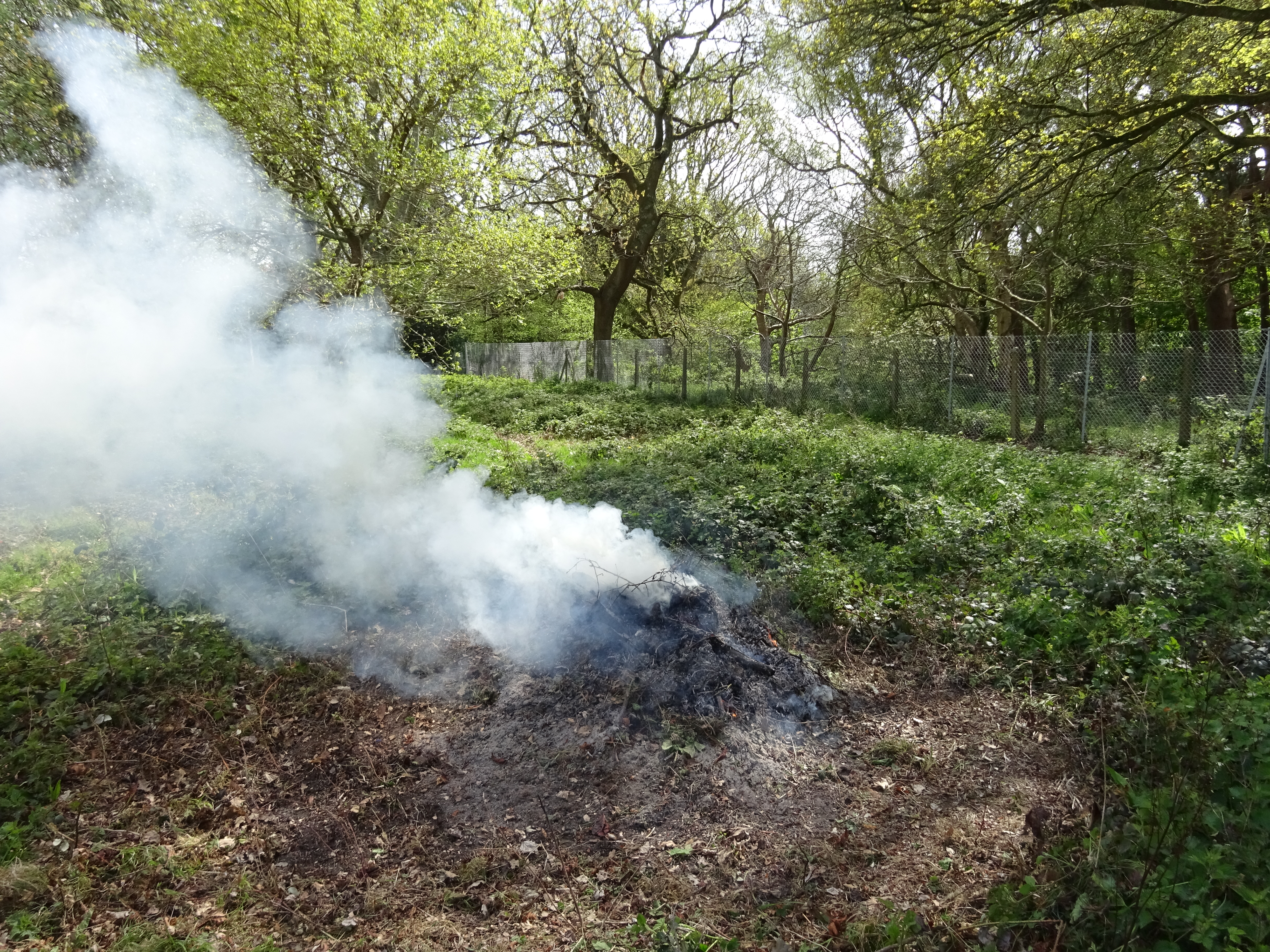 When the wind was in the right direction to avoid any nuisance to the neighbouring properties, the cuttings were burnt.
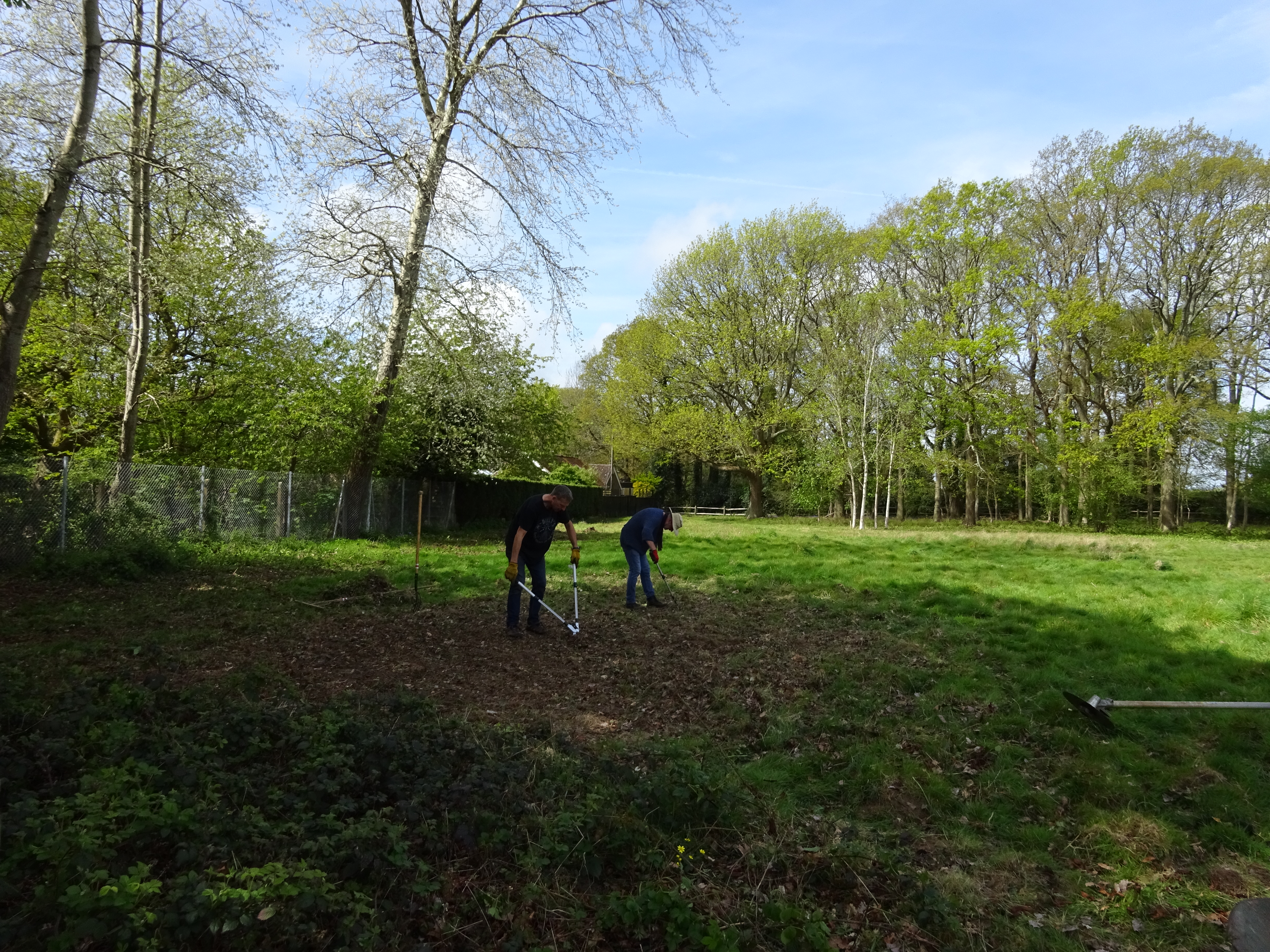 Large areas of meadow brush and bramble spread were removed.
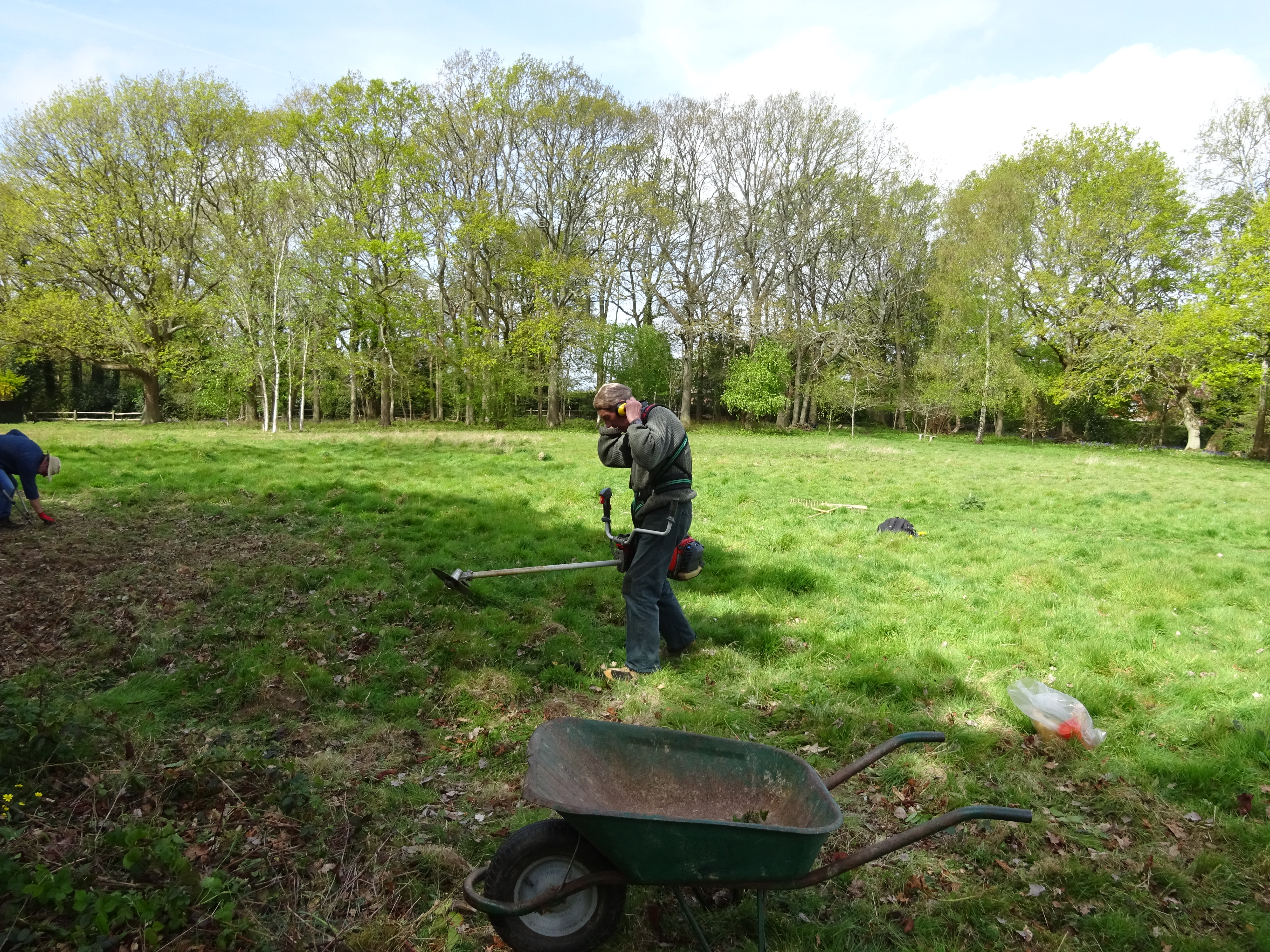 Brush cutters were used to deal with these difficult areas.
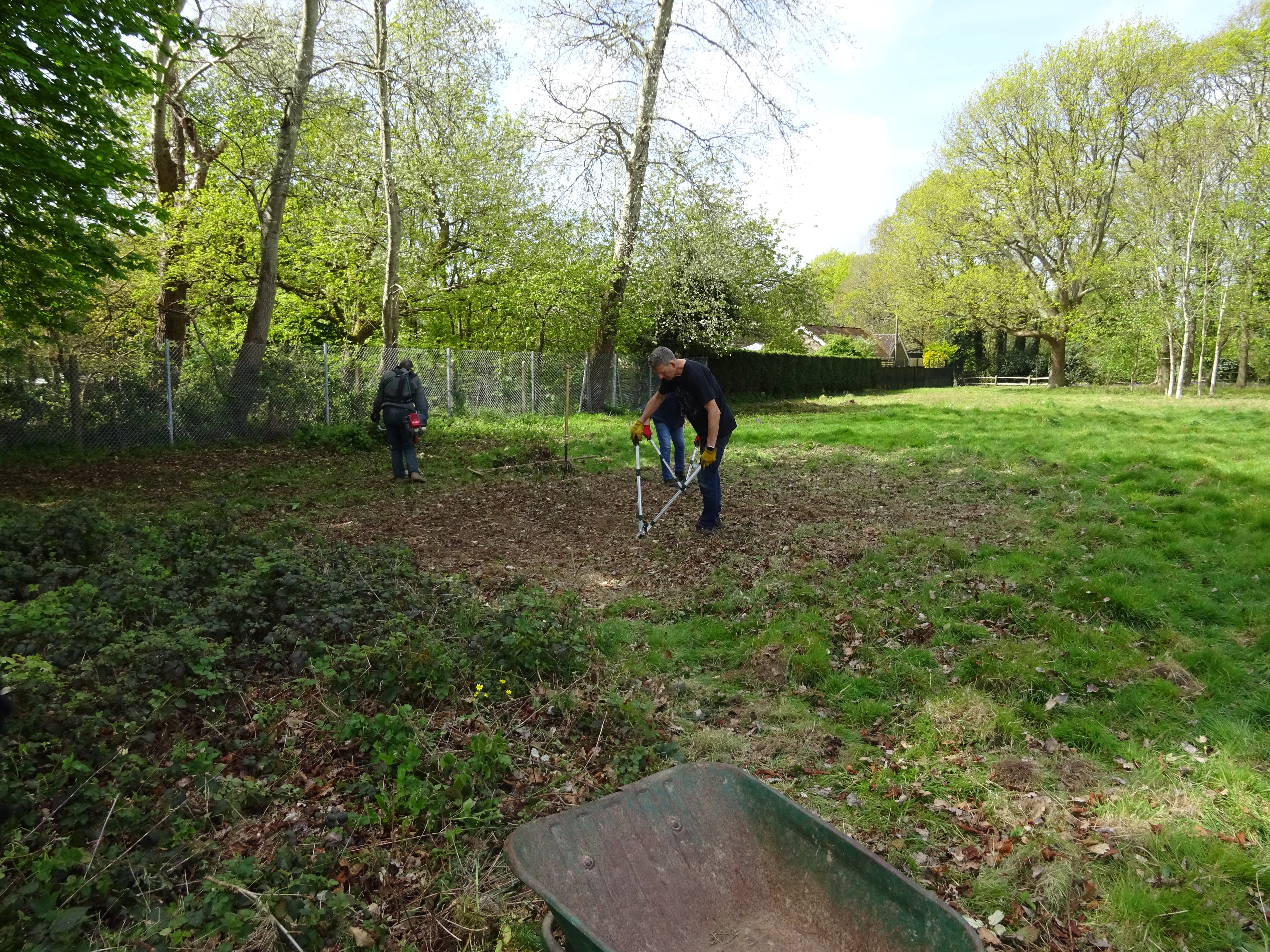 If unchecked, they would impede the passage of the users of the public pathways around the site.
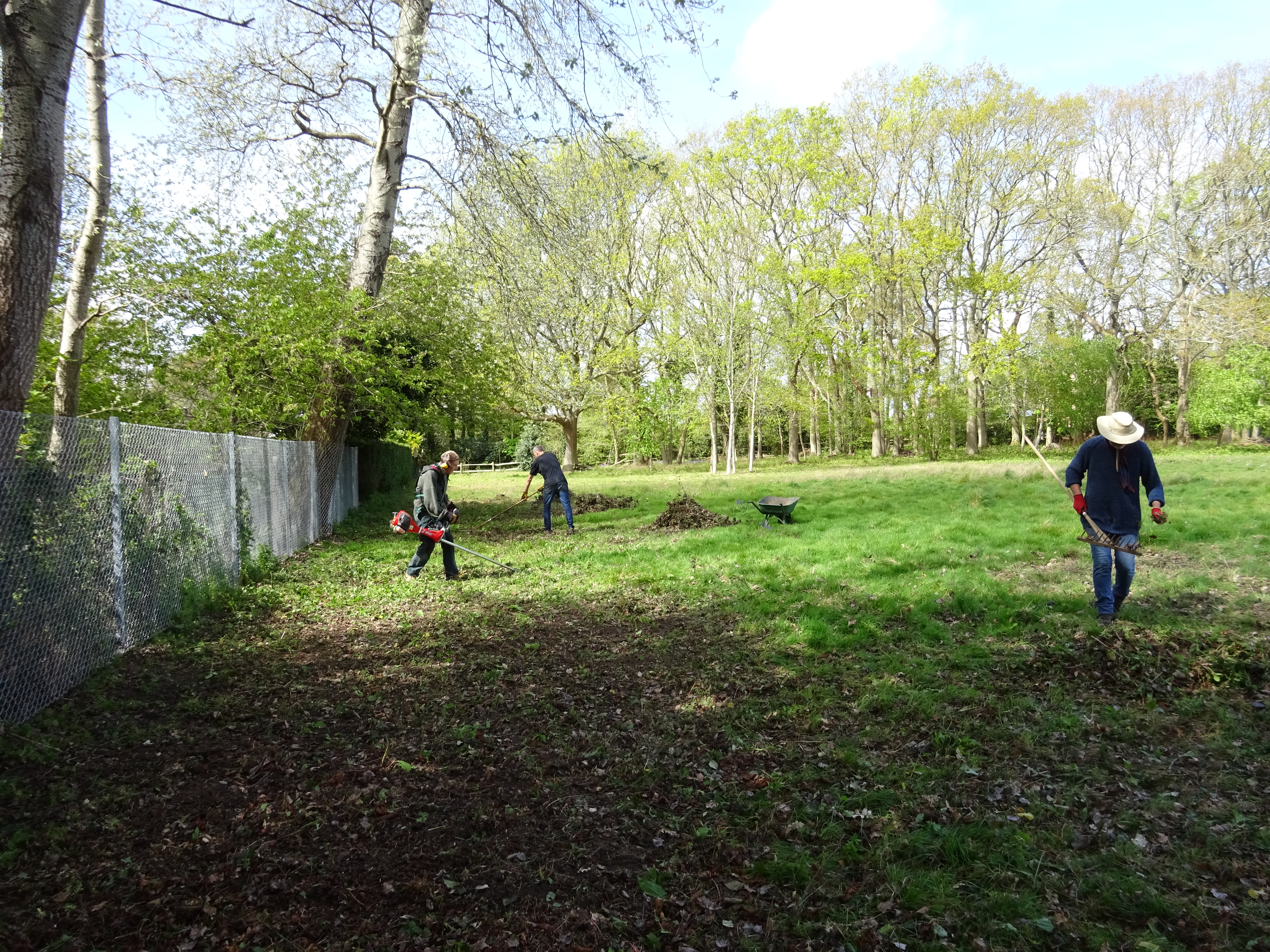 A careful balance is maintained between requirements for nature to flourish….
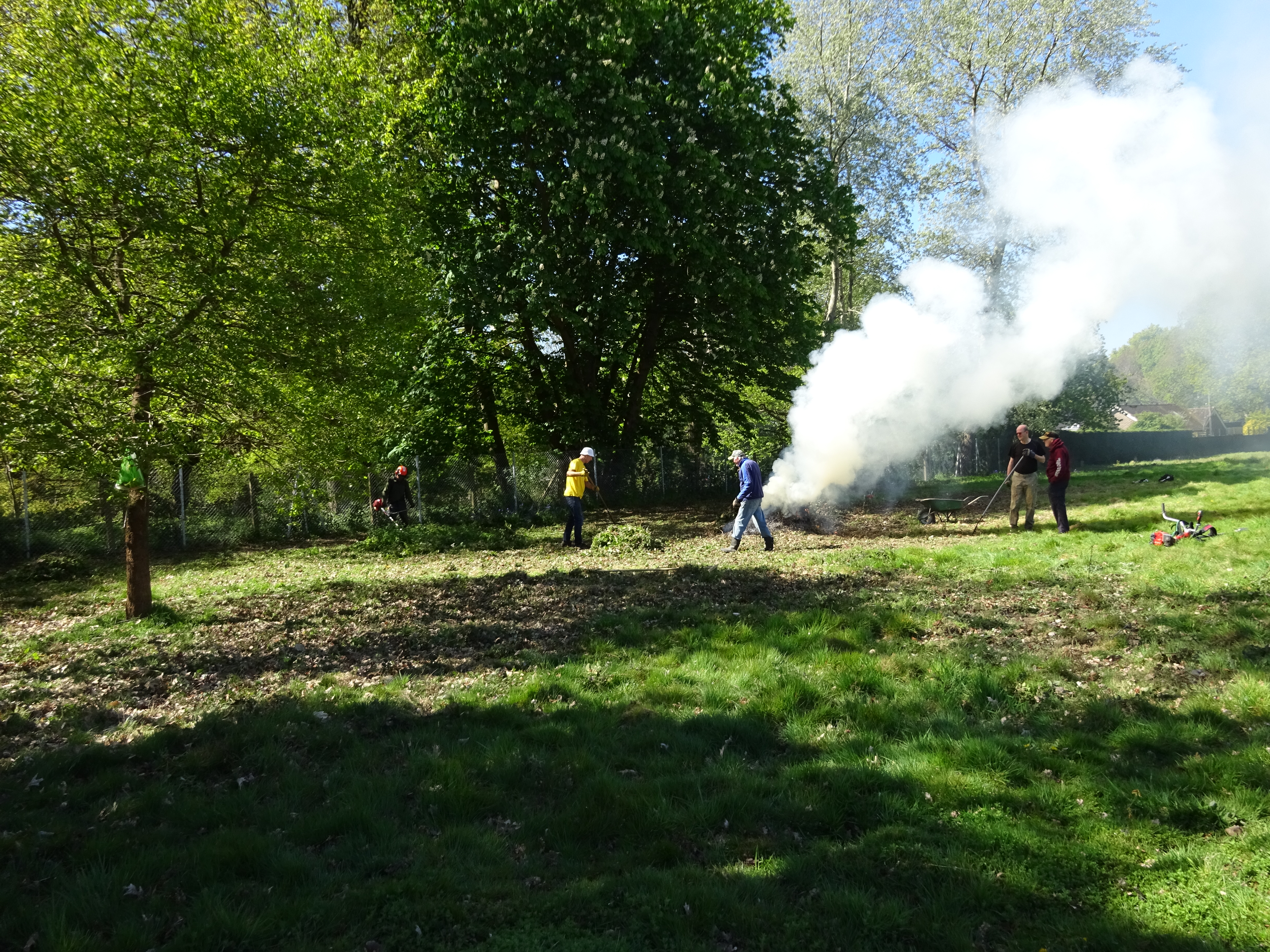 …. and public usage of the area.
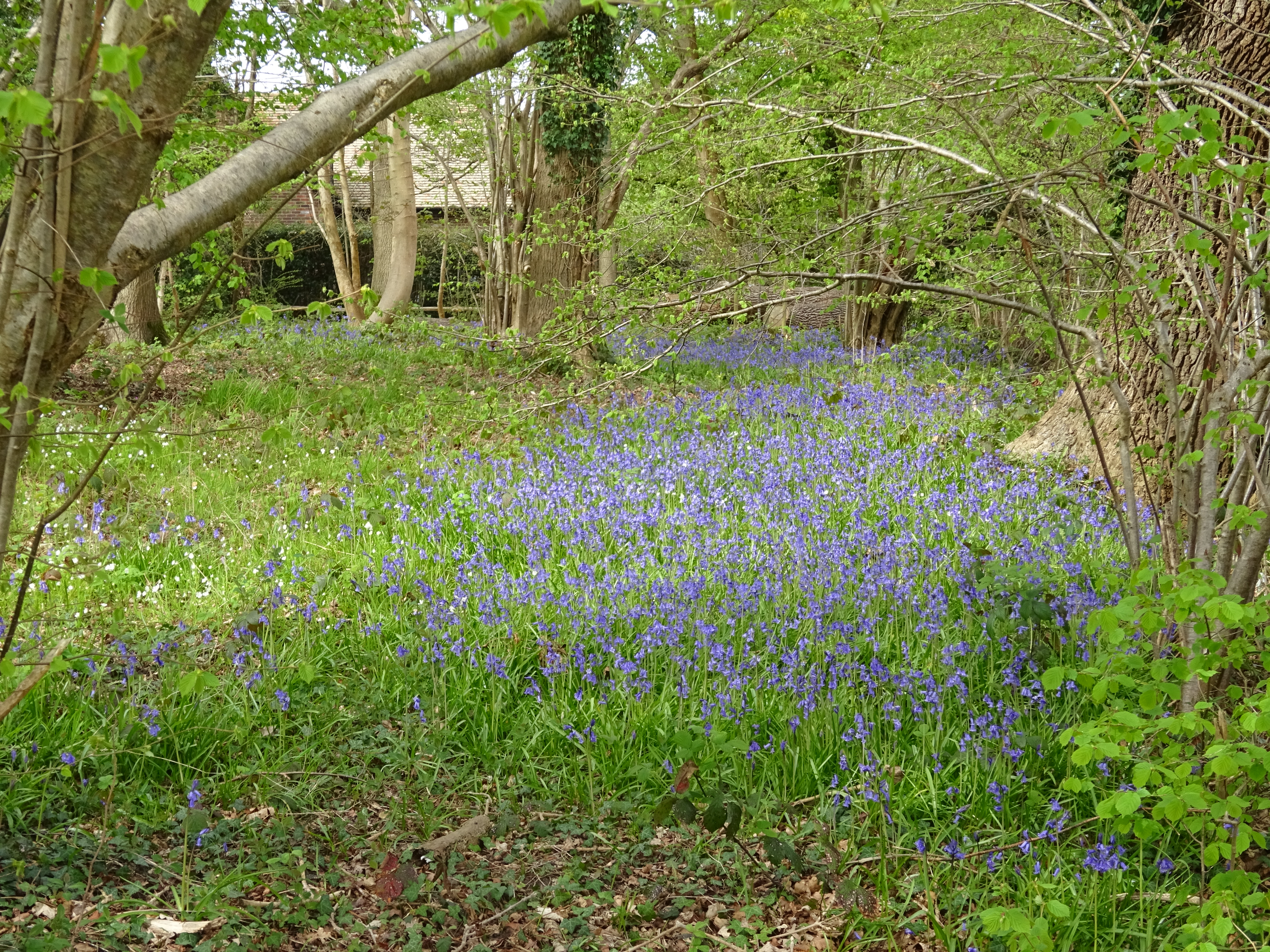 This allows wildflowers to develop unimpeded….
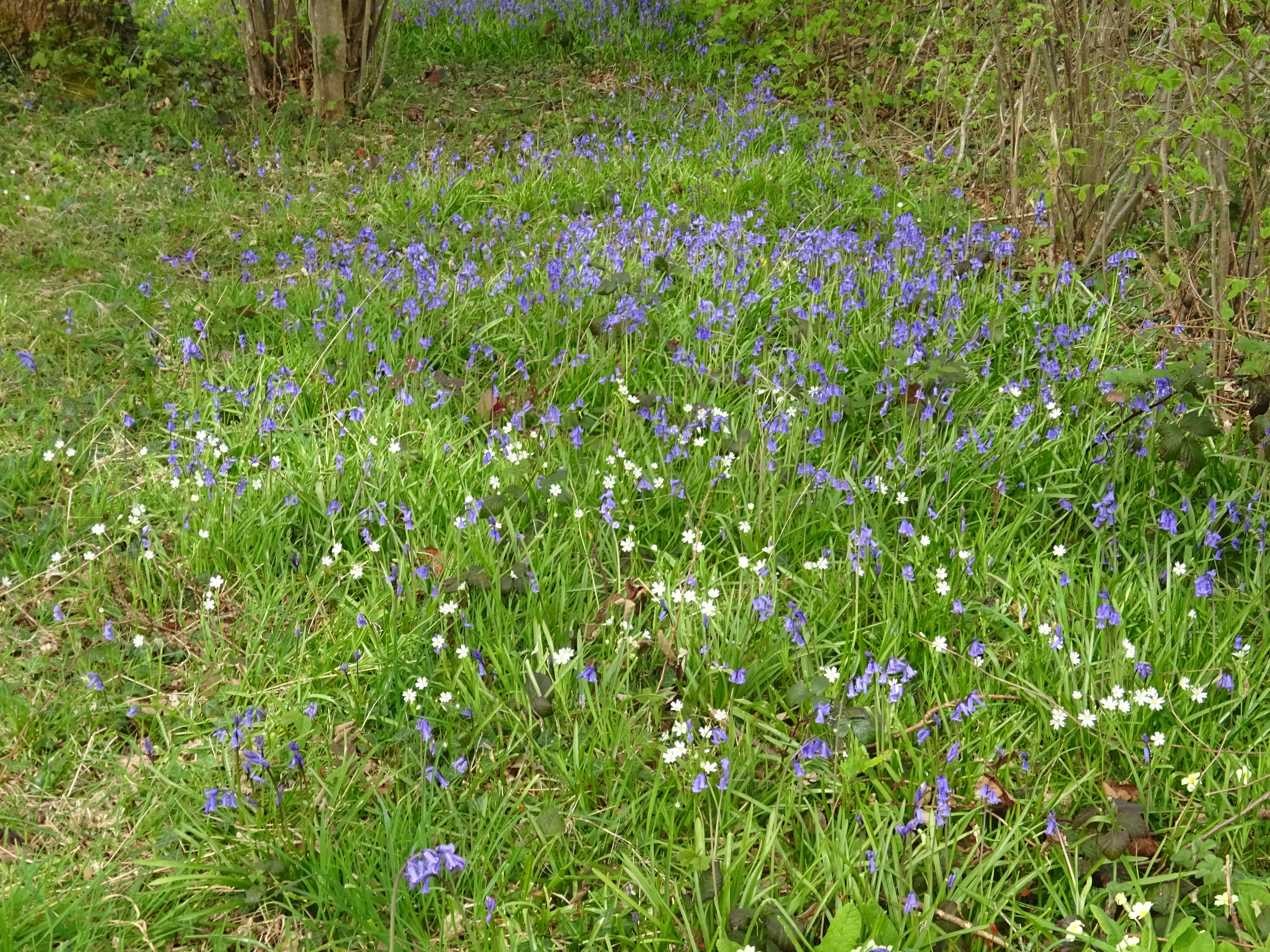 …. to benefit the natural environment….
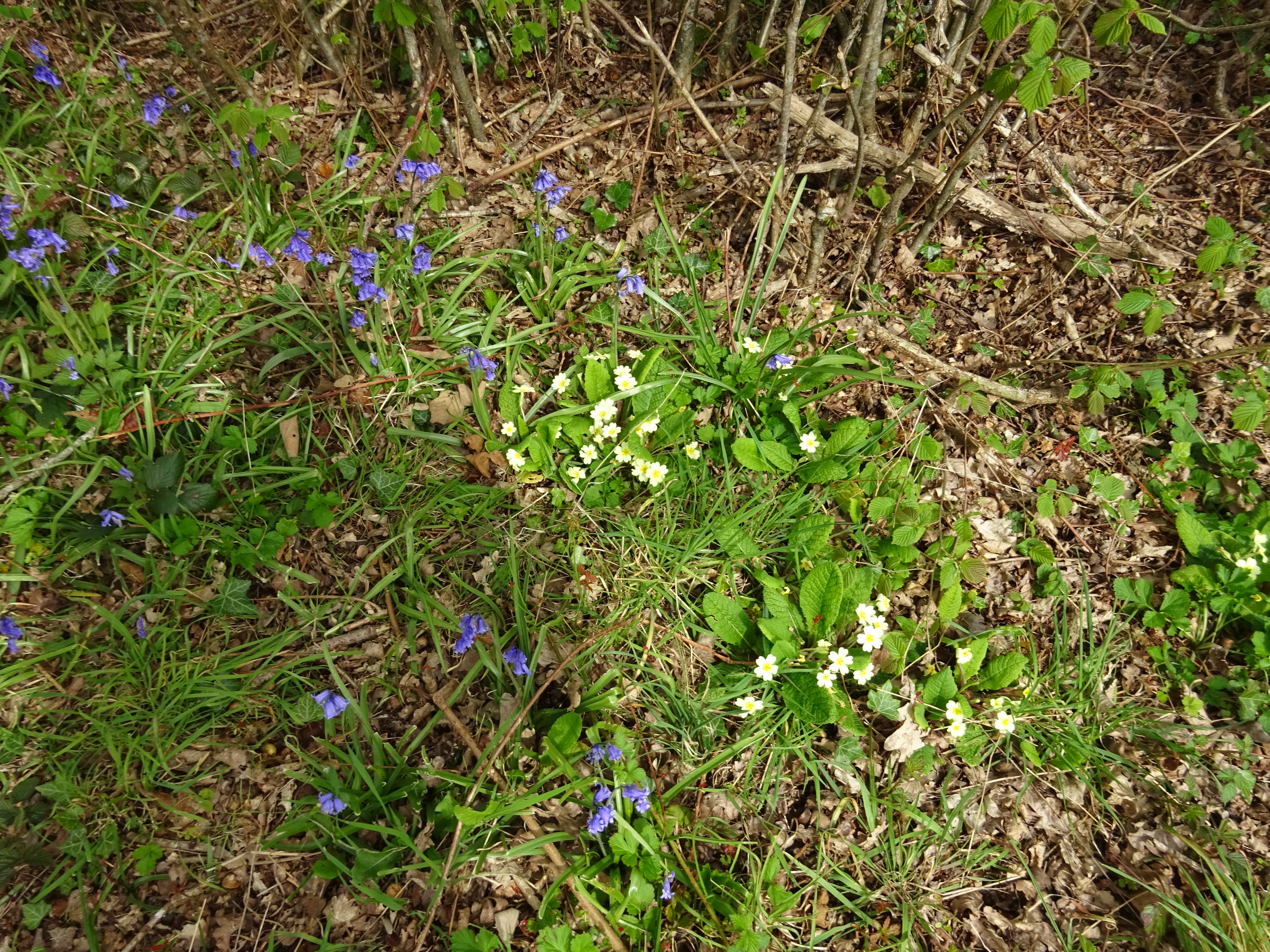 …. all around the site….
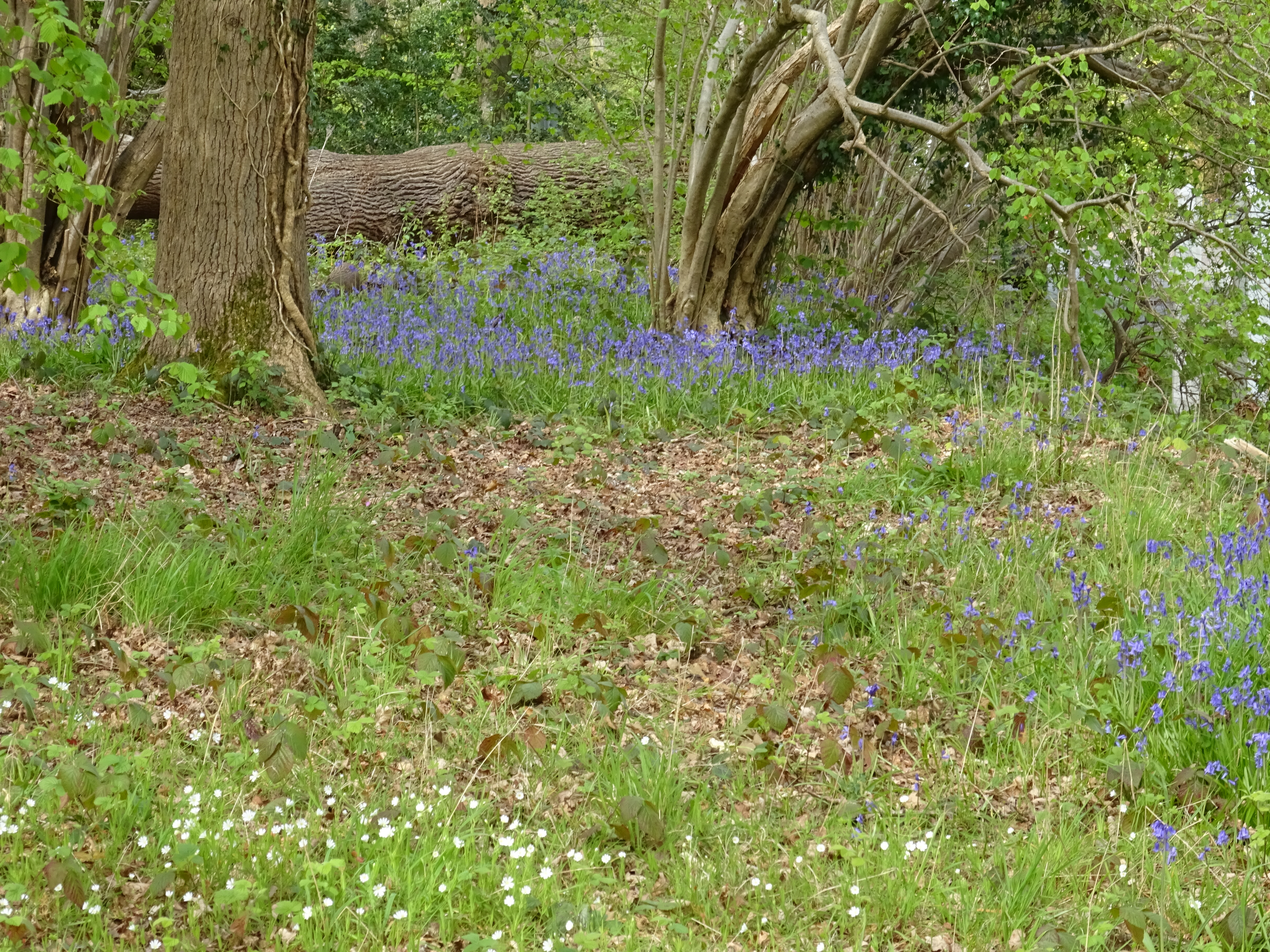 …. boosted by previous group initiatives of wildflower plug planting.
The results of this endeavour follow a similar pattern to our effort to assist schoolchildren from Albourne school at the end of last year to introduce wildflowers into Albourne Millennium Garden. Despite the first year restriction for blooming to result, due to all energy being utilised by these bluebell plants to create initial ‘roots and shoots’, a return visit early this year found the emergence of many plants already. This is encouraging for their further development over future years, and an ongoing tribute to the effort applied by the schoolchildren.
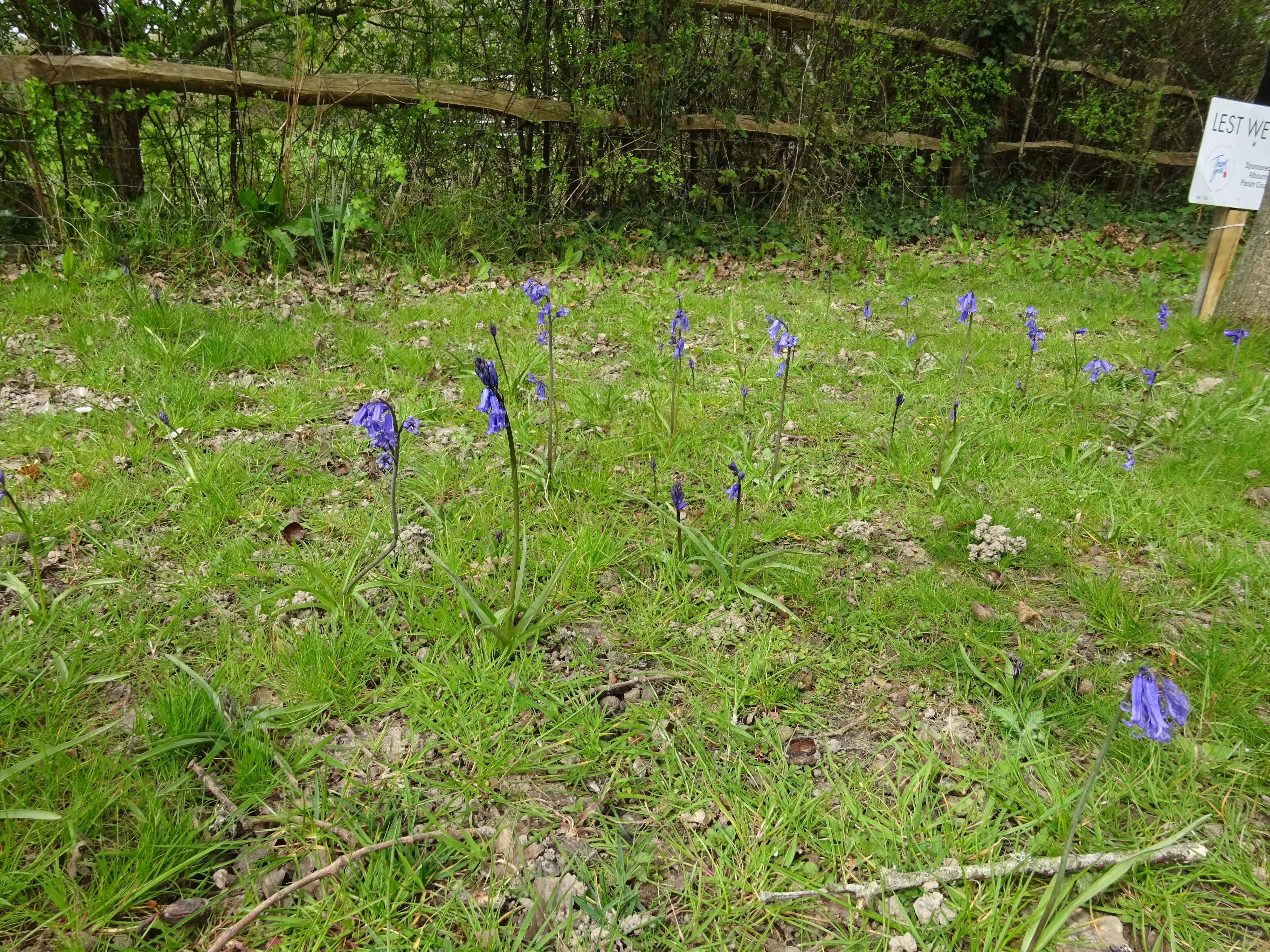 Bluebells appearing already following the planting undertaken by the schoolchildren.
With the natural environment and the species who rely on it to survive being pushed into ever decreasing areas by human expansion, the formation of these natural areas provide a valuable life-line for our natural world. Their maintenance and ongoing survival are very much in the hands of those willing to provide such inter-generational effort, and needs to be supported wherever possible.