Due to the continuous wet weather experienced in the last two months, The Woodland, Flora & Fauna Group activities have been severely restricted. With dry windows appearing in the weather forecast at very short notice, it has not been possible to prearrange any activities involving volunteers at our major sites.
The only task we have been able to undertake is the vital cleaning and maintenance routine we must perform on all our installed owl boxes in our wide-ranging Mid Sussex barn owl and tawny owl conservation area. This must be done during the winter months so that the boxes are clean and ready to accommodate any breeding activity in the late spring and early summer months.
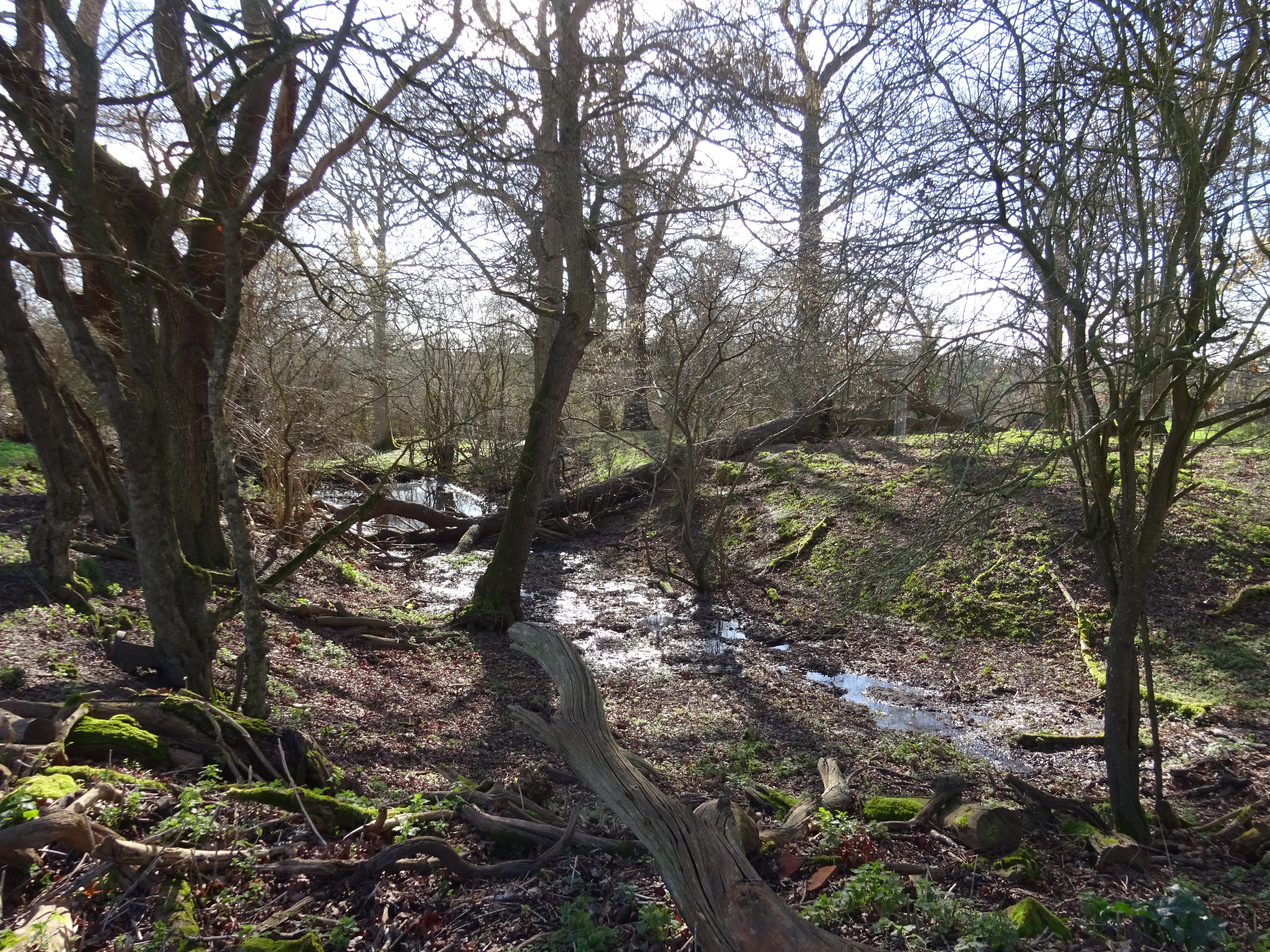 The wet weather this year has been been continuous with few dry intervals to undertake our conservation work.
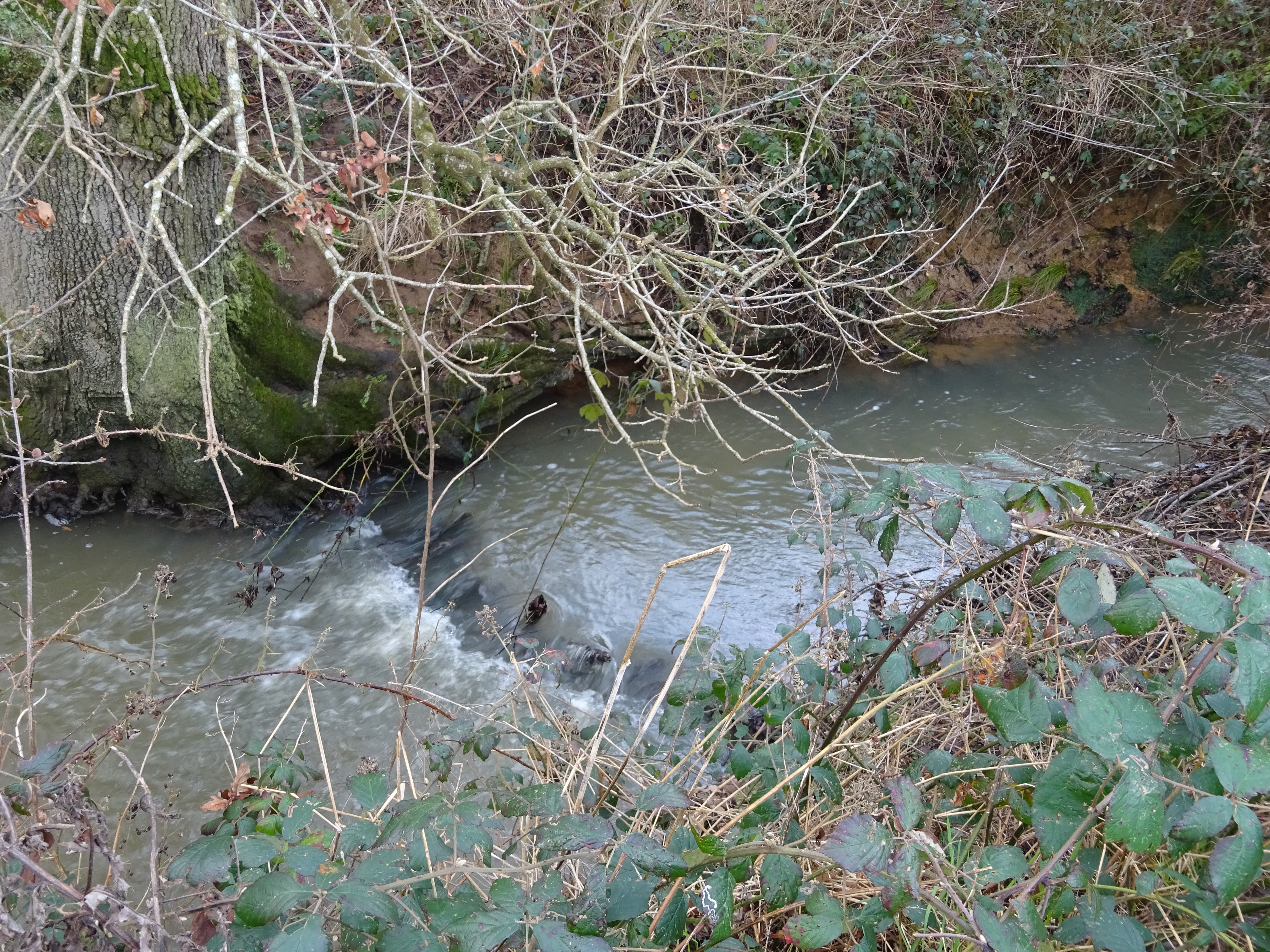 The ability for the ground to deal with this excess of rainfall has been impossible and resulting quagmire conditions have been experienced.
During the early months of the year, the ceaseless rainfall presented only random and brief dry opportunities at short notice, so our ability to recruit the teams of volunteers required to carry ladders and equipment over soggy fields to the box locations, has been extremely difficult. Volunteer availability rarely matches a suddenly appearing short dry interval, so with reduced team strength to carry them out, the work effort has been long, hard, and protracted.
We began by tackling the scores of barn owl boxes. Each box needs to be cleaned out, cleansed with bird friendly anti-bacterial spray, refilled with clean bedding material, any damage caused by falling branches or squirrels repaired, and finally painted as necessary.
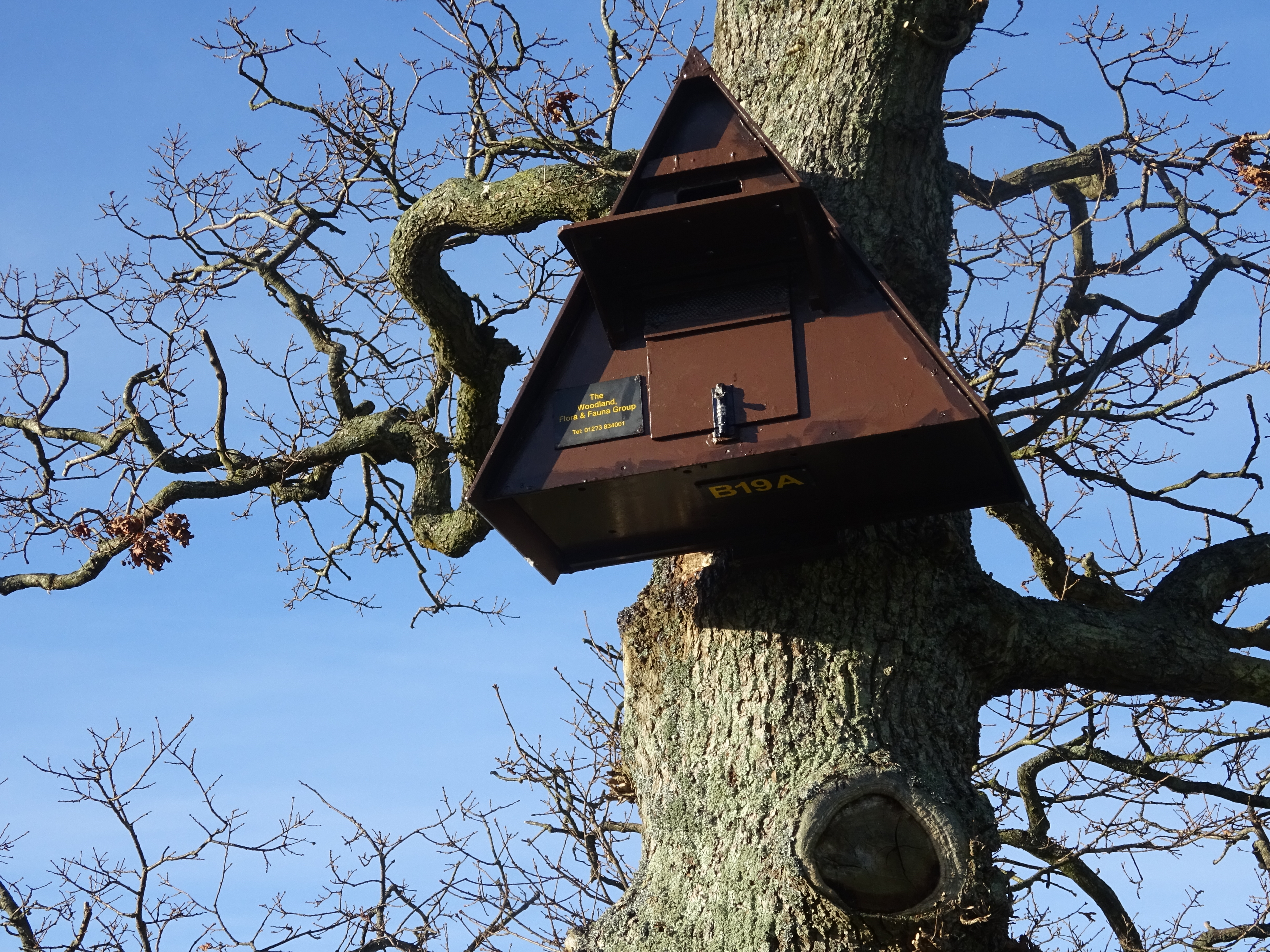 One of the scores of barn owl boxes installed across our large conservation area.
Once these are completed, we turn our attention to our wide-ranging tawny owl boxes, where we often get an increased presence of squirrels causing structural damage to the boxes with their uncontrolled gnawing.
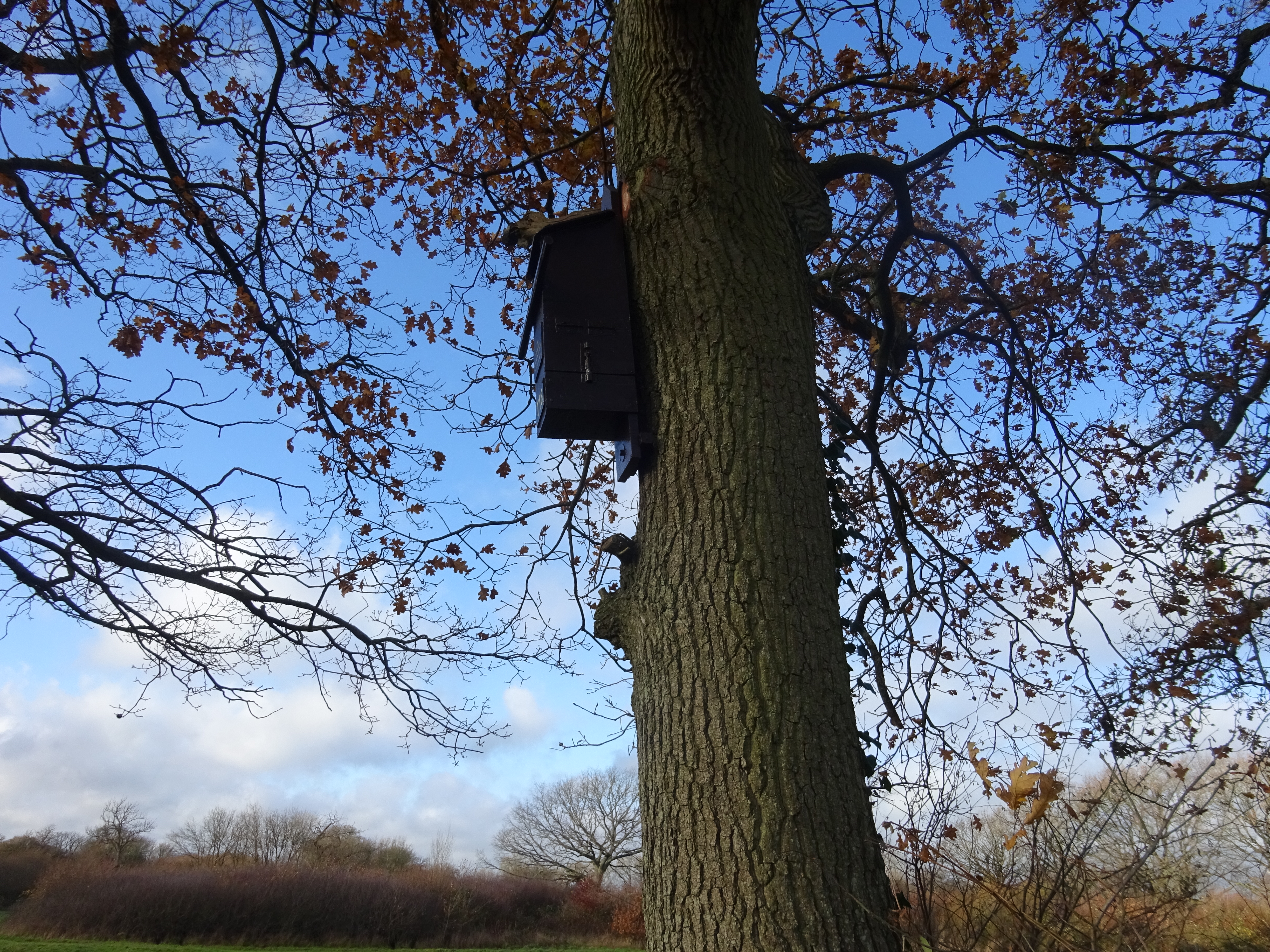 One of the many tawny owl boxes erected in our local countryside.
Where squirrels have occupied boxes, their nesting material completely fills the boxes, preventing any owl occupancy. Our first task is always to empty the box and cleanse it to allow it to become an healthy owl residence again. We then undertake any repairs to damage they have caused and maintain it in the usual way. There is always a pressing deadline for this work to be done before the breeding season commences. This makes the task extremely condensed and time consuming, with a prolonged period of intense effort required. This is being complicated immeasurably by the recent very wet winter weather patterns that have emerged.
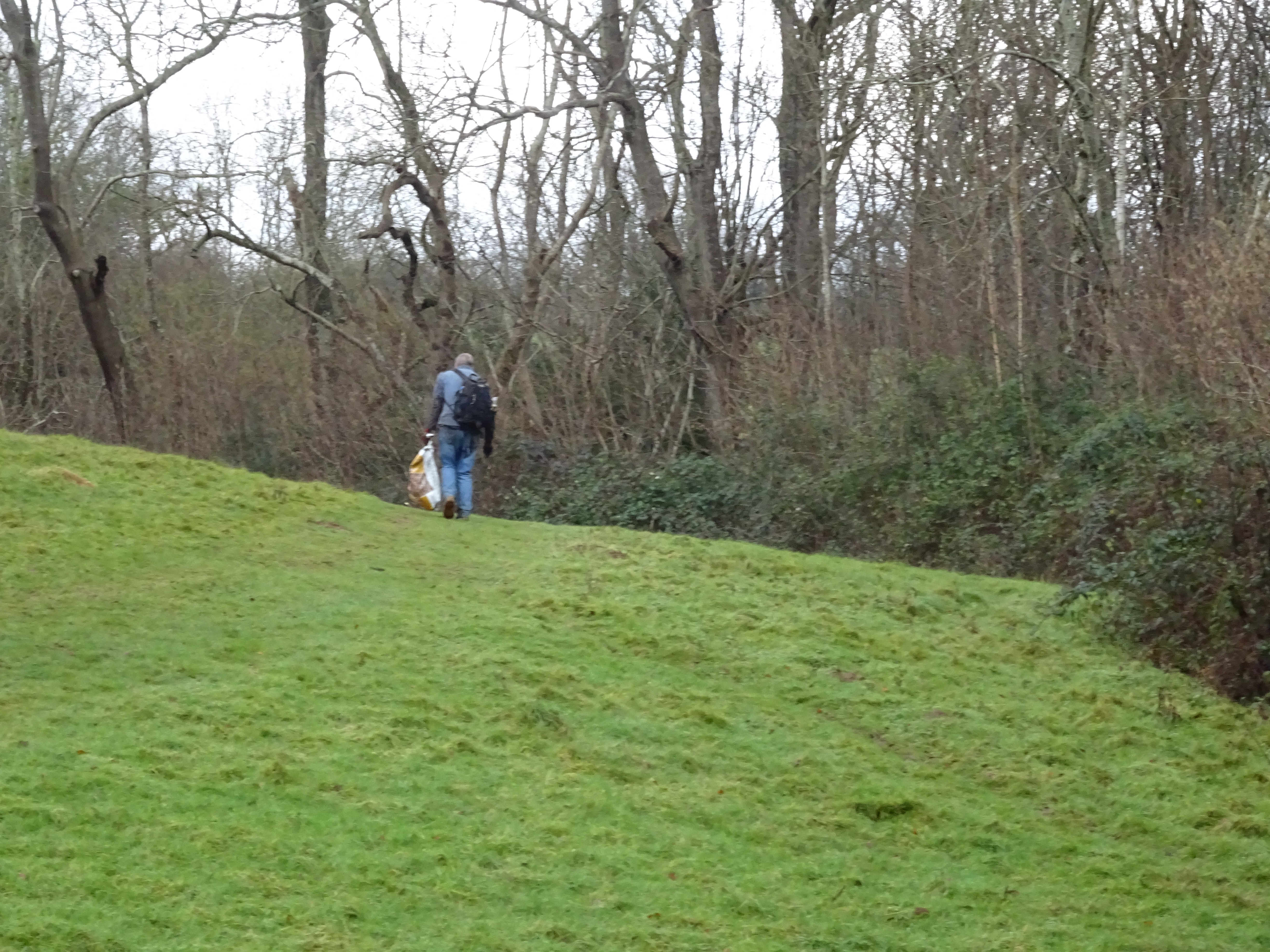 Each box visited requires a long trek over waterlogged fields carrying heavy equipment.
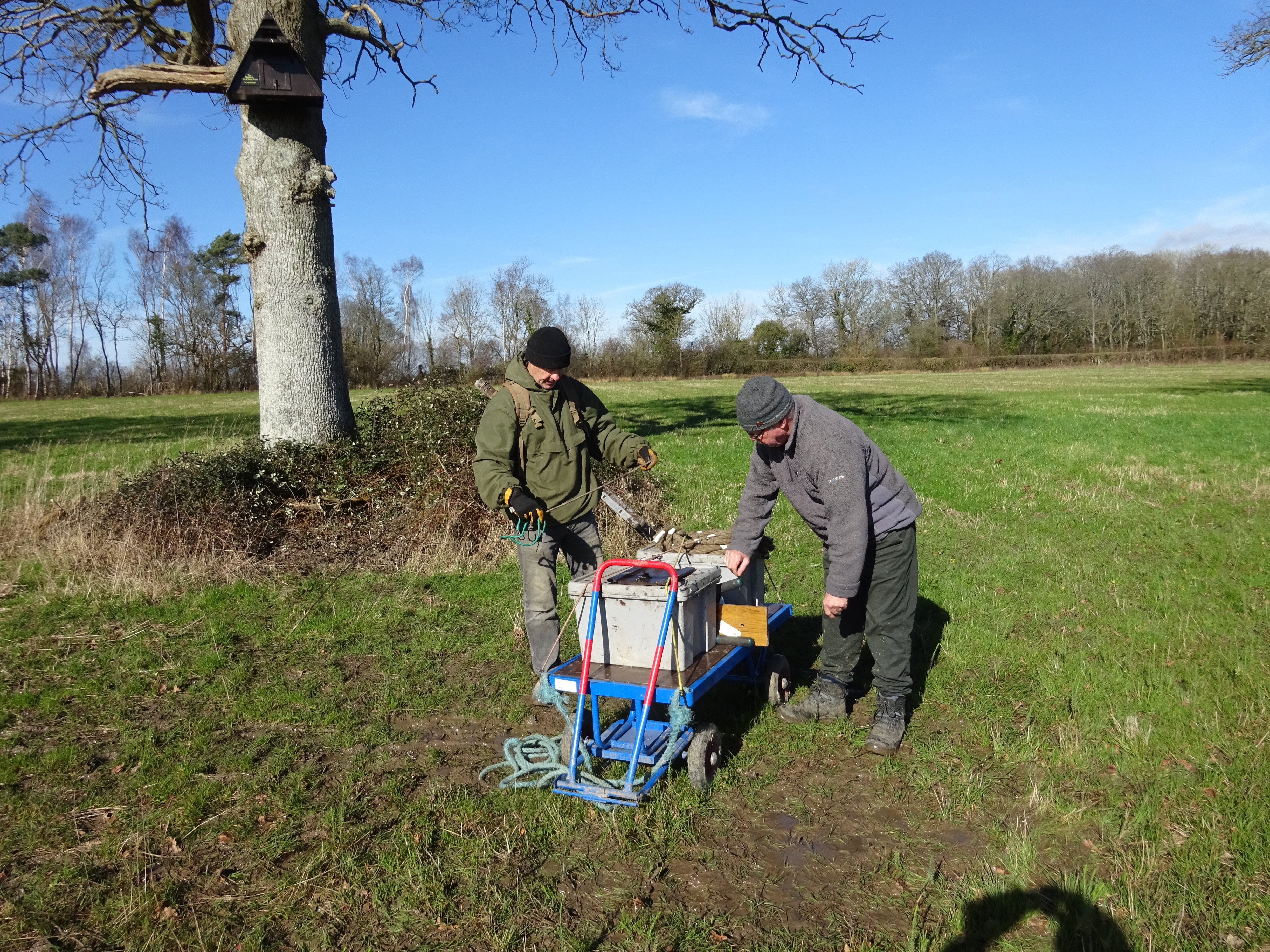 A team of fit and strong people is necessary to help with the task in the soggy ground conditions.
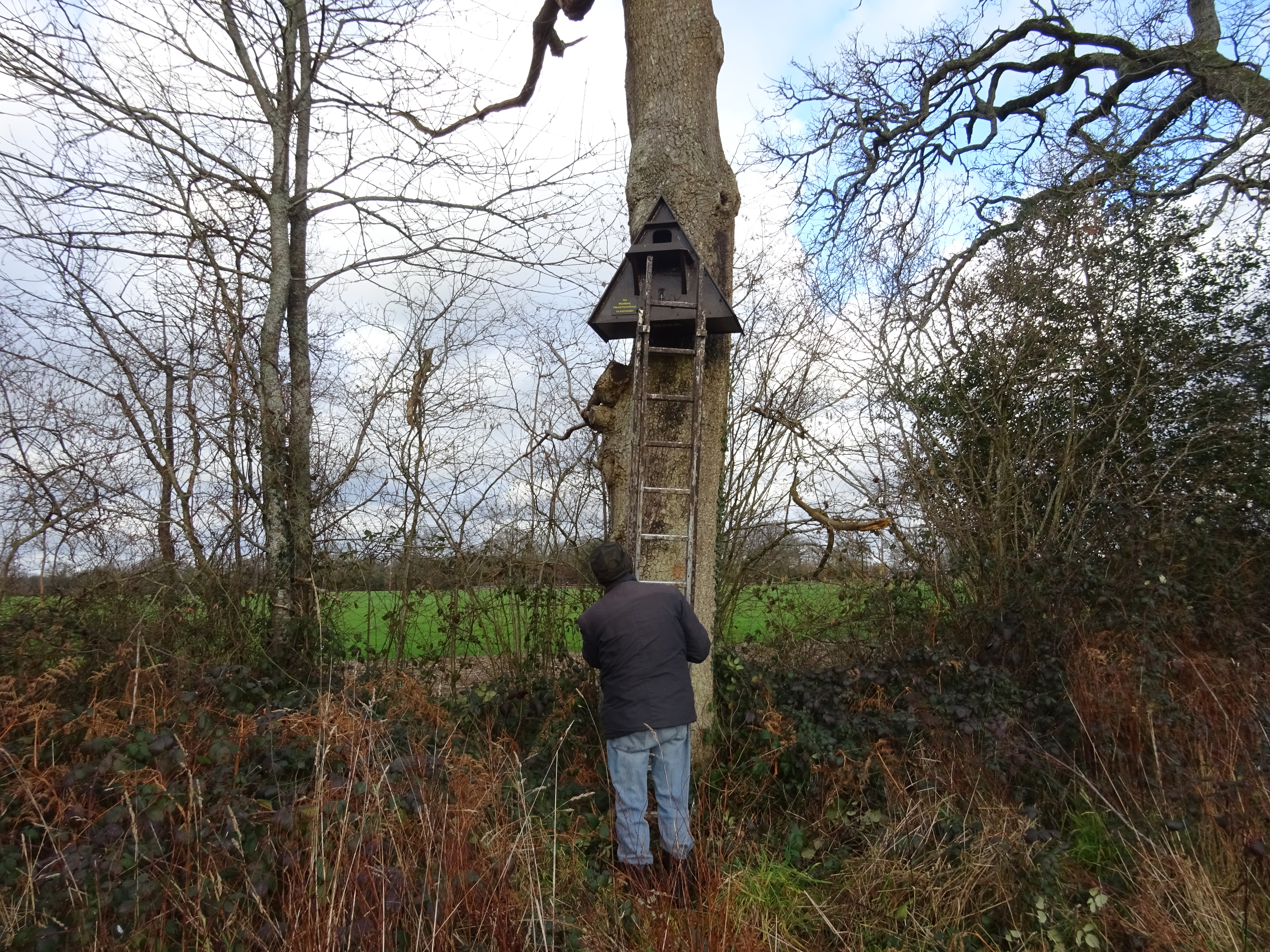 Ladders must be transported to gain access to each box.
.
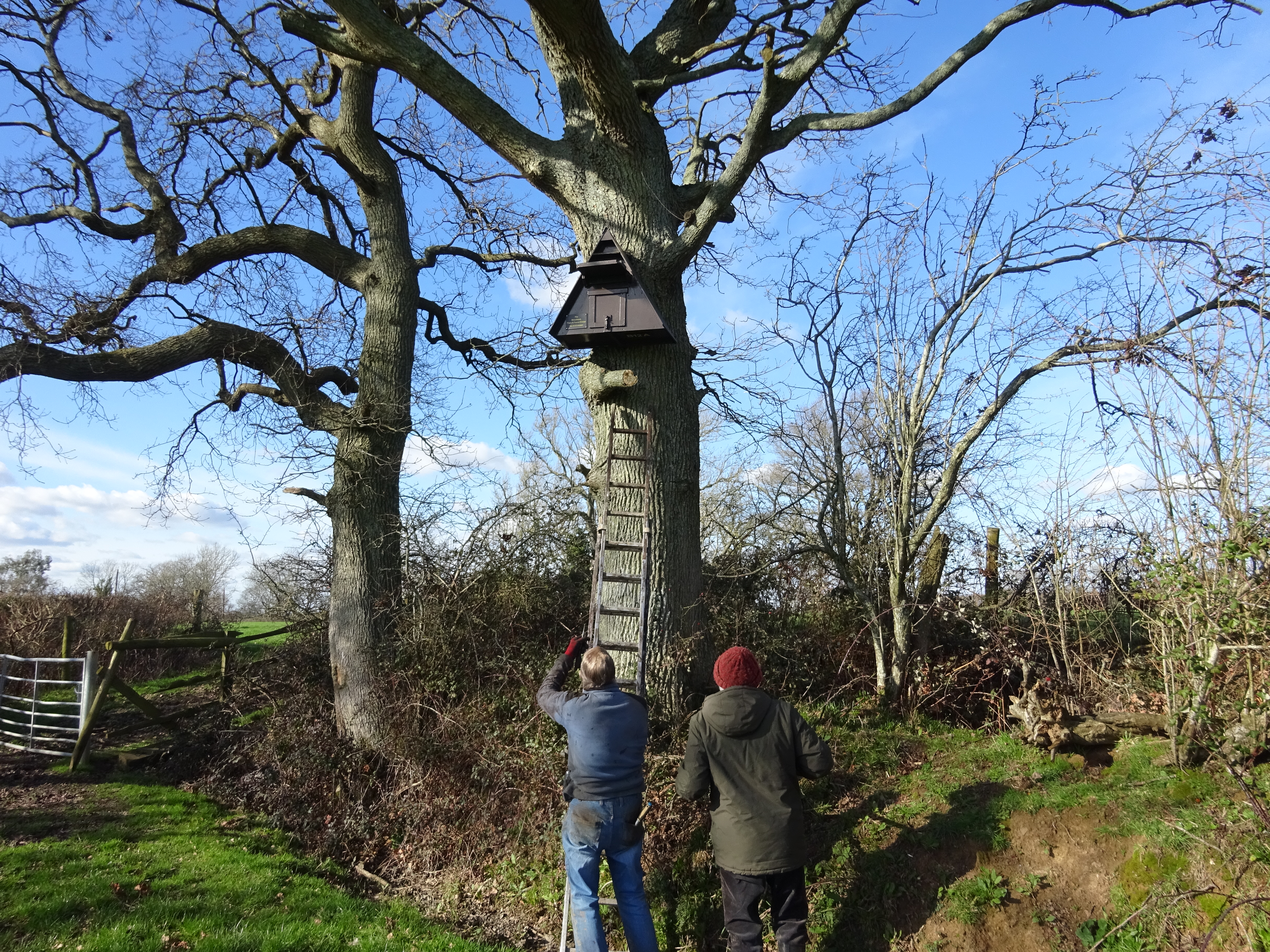 With varying terrain and ground conditions at each location, the stable mounting of the ladders is critical to safe working.
.
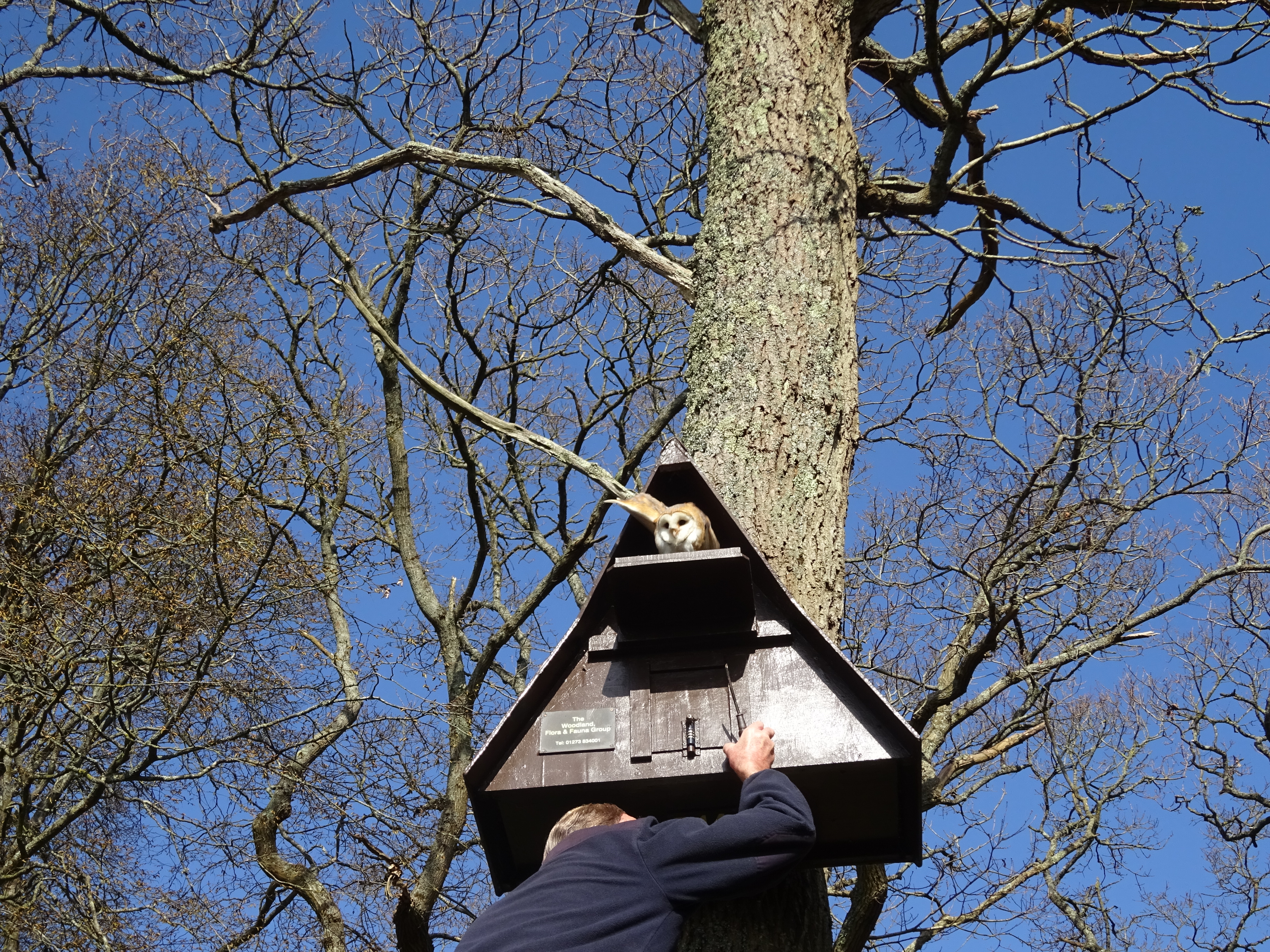 When ladders are positioned, this is usually the point any barn owl resident temporarily vacates the box, as seen here.
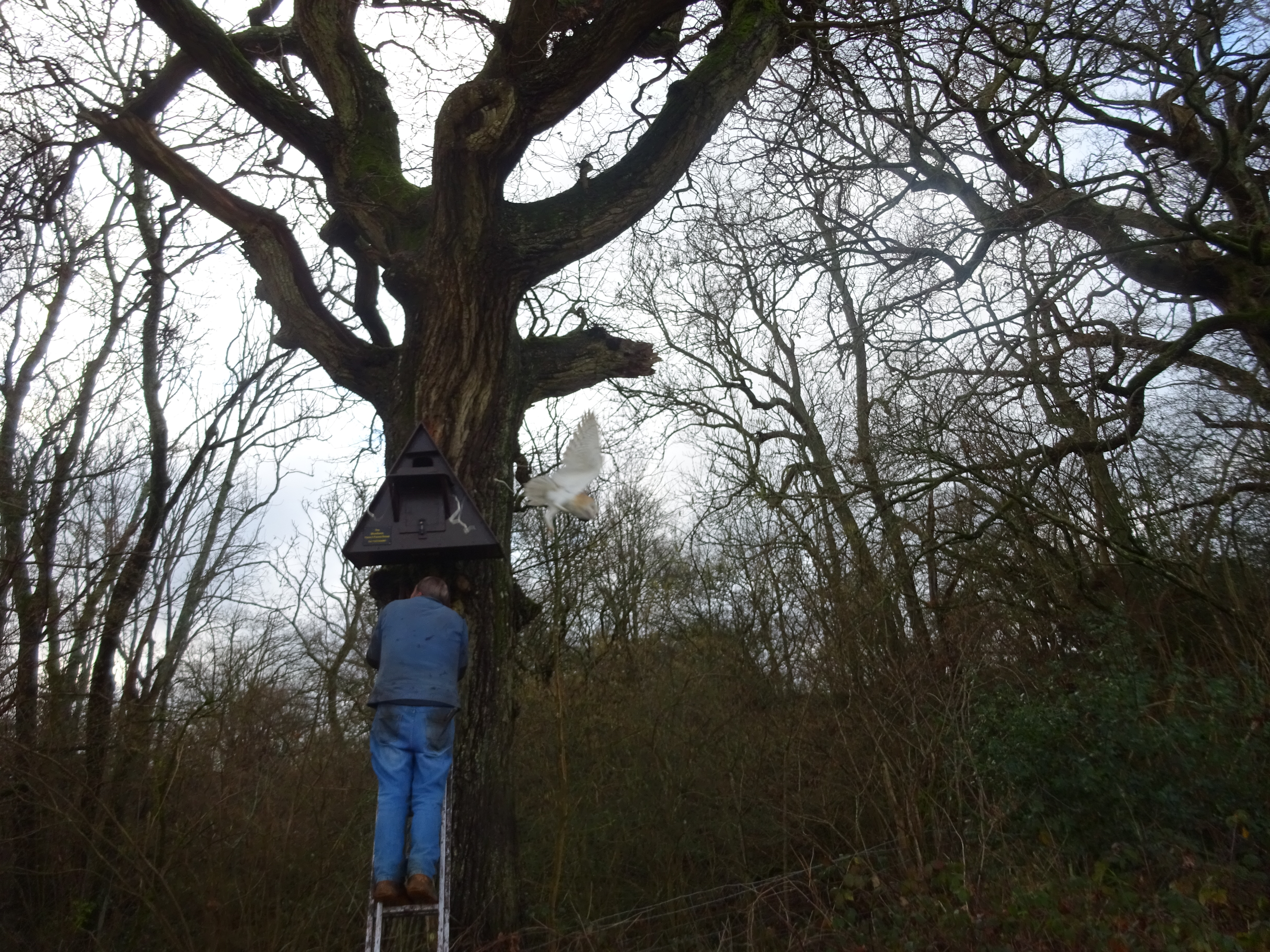 This is usually accompanied by an ejection of a streak of defensive owl ‘whitewash’ (as seen above) which we hurriedly duck.
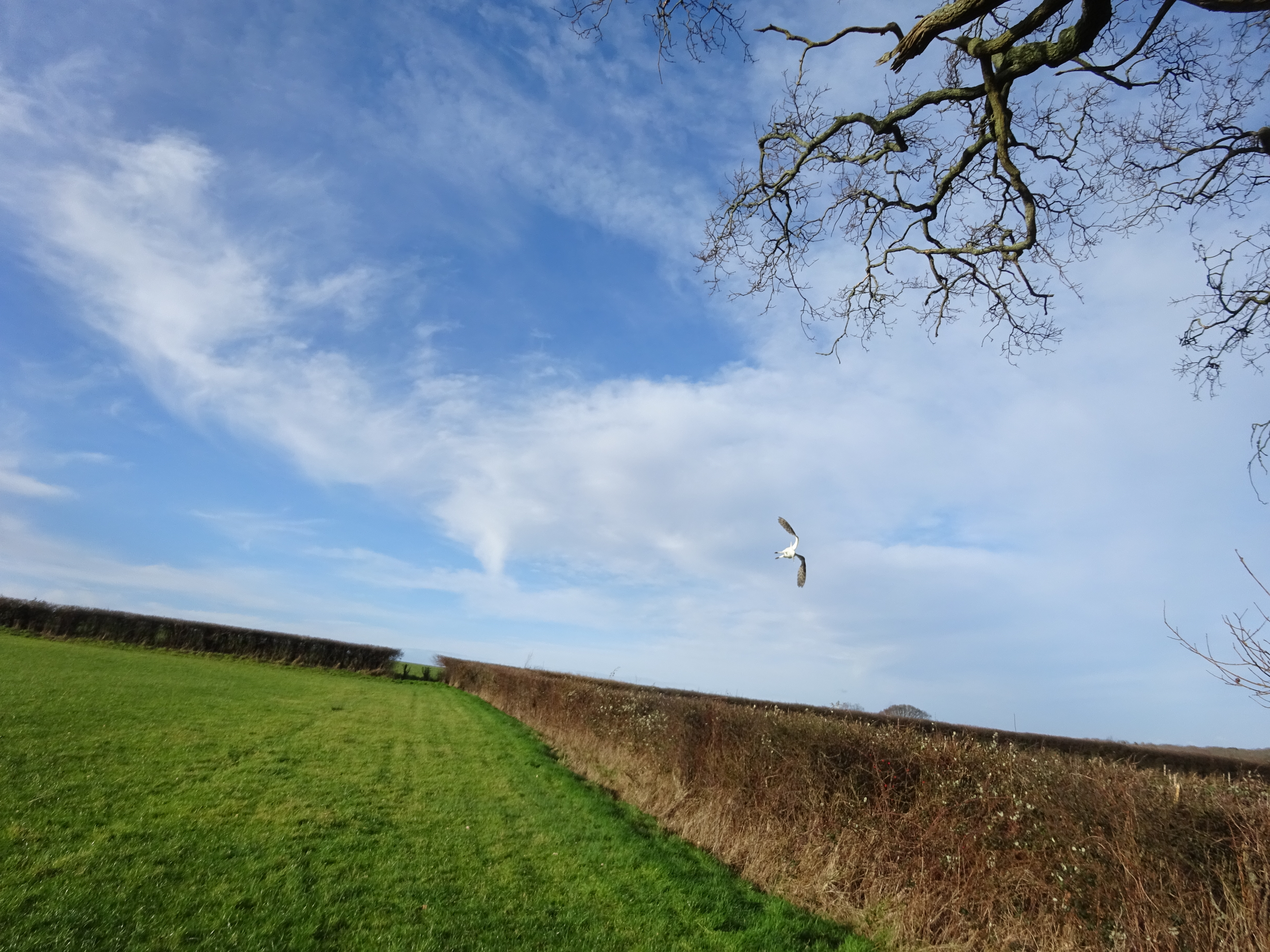 The resident owls usually fly to a nearby tree and return when our work is completed.
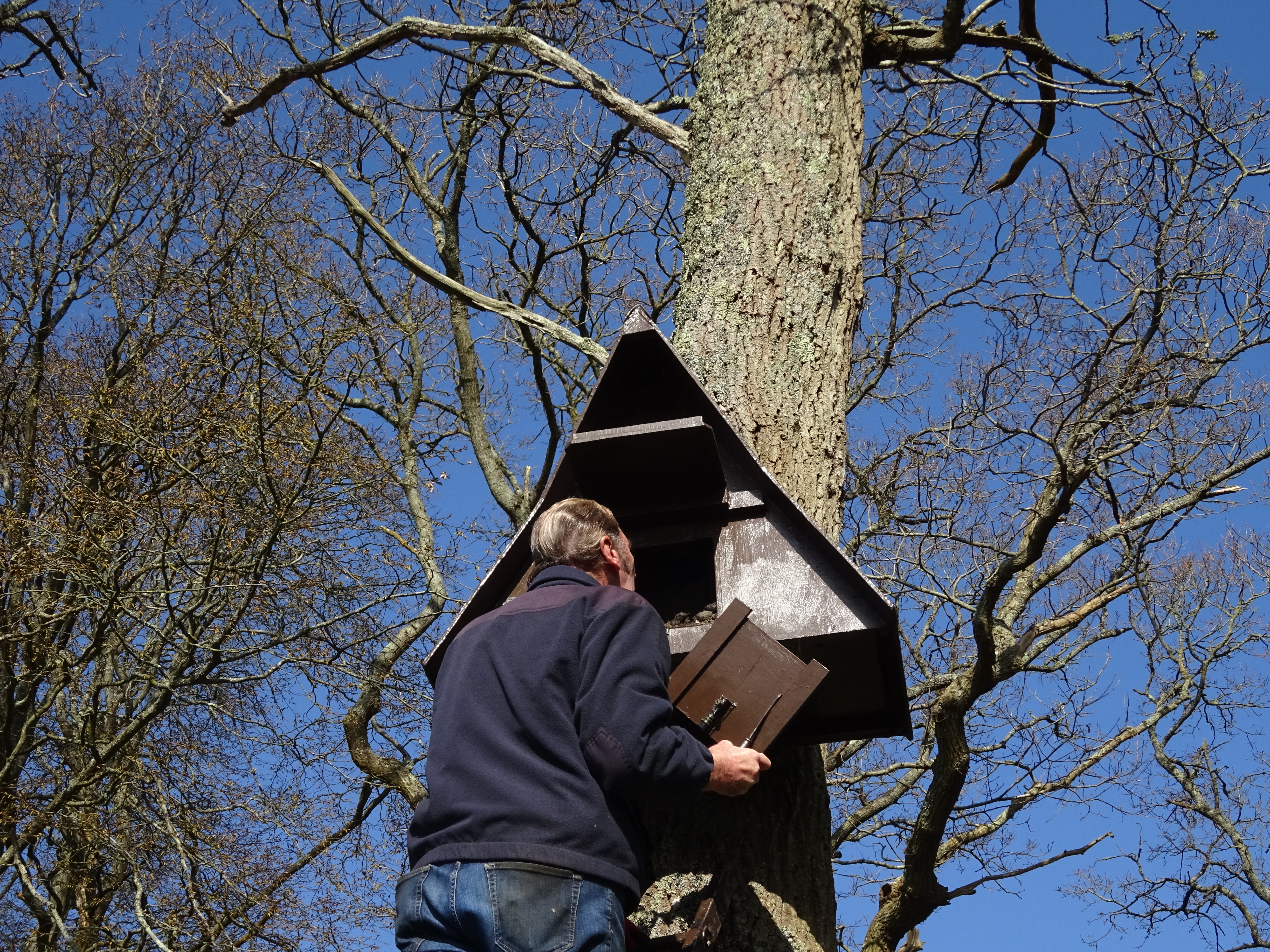 An initial inspection is then carried out to check inside and assess any damage.
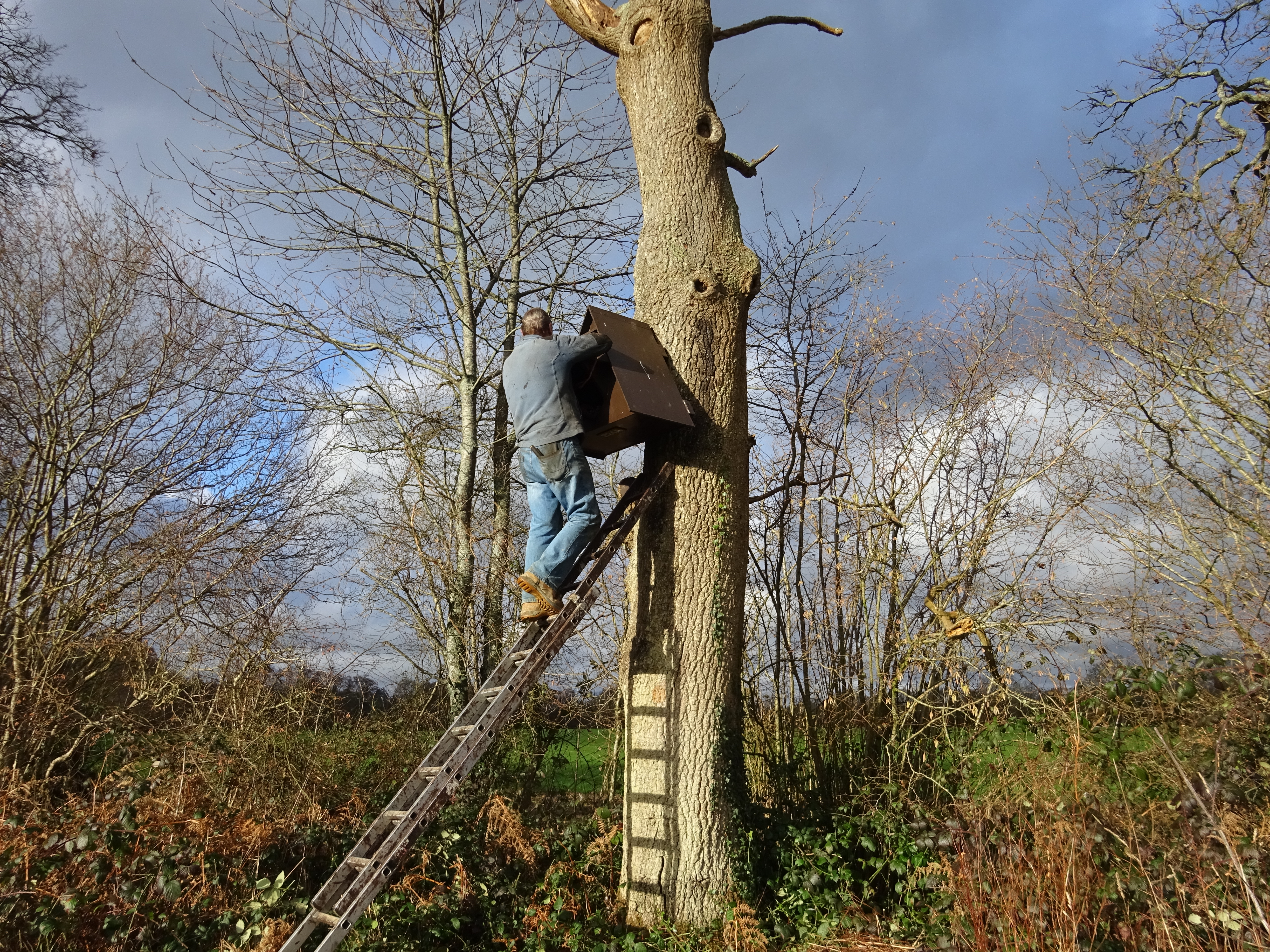 All soiled nesting debris inside is then removed. For this the ladder is inclined less steeply to prevent being engulfed by the cascading contents which are usually undesirable to encounter closely.
.
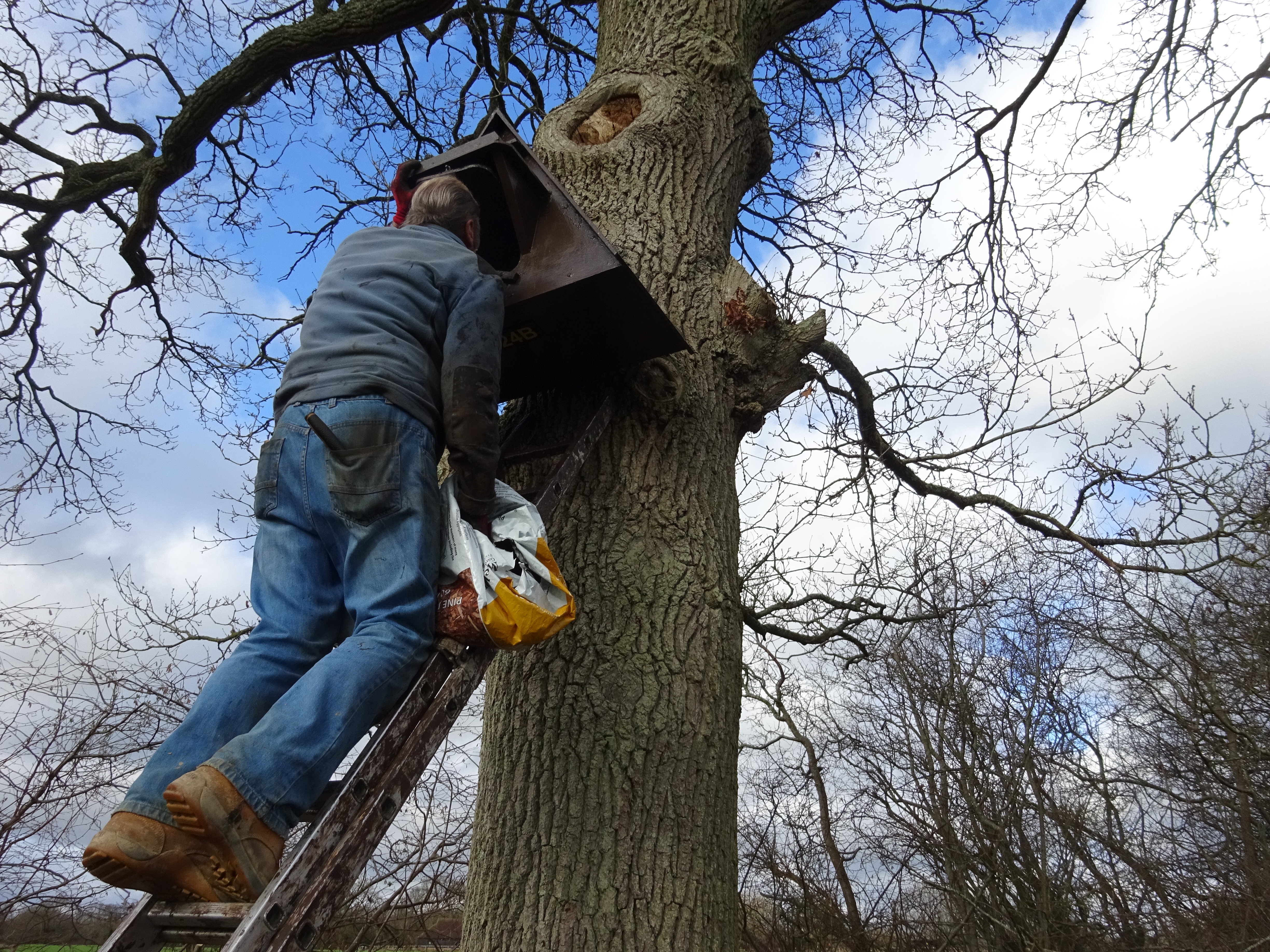 A team member then disinfects the box and refills it with clean bedding material.
.
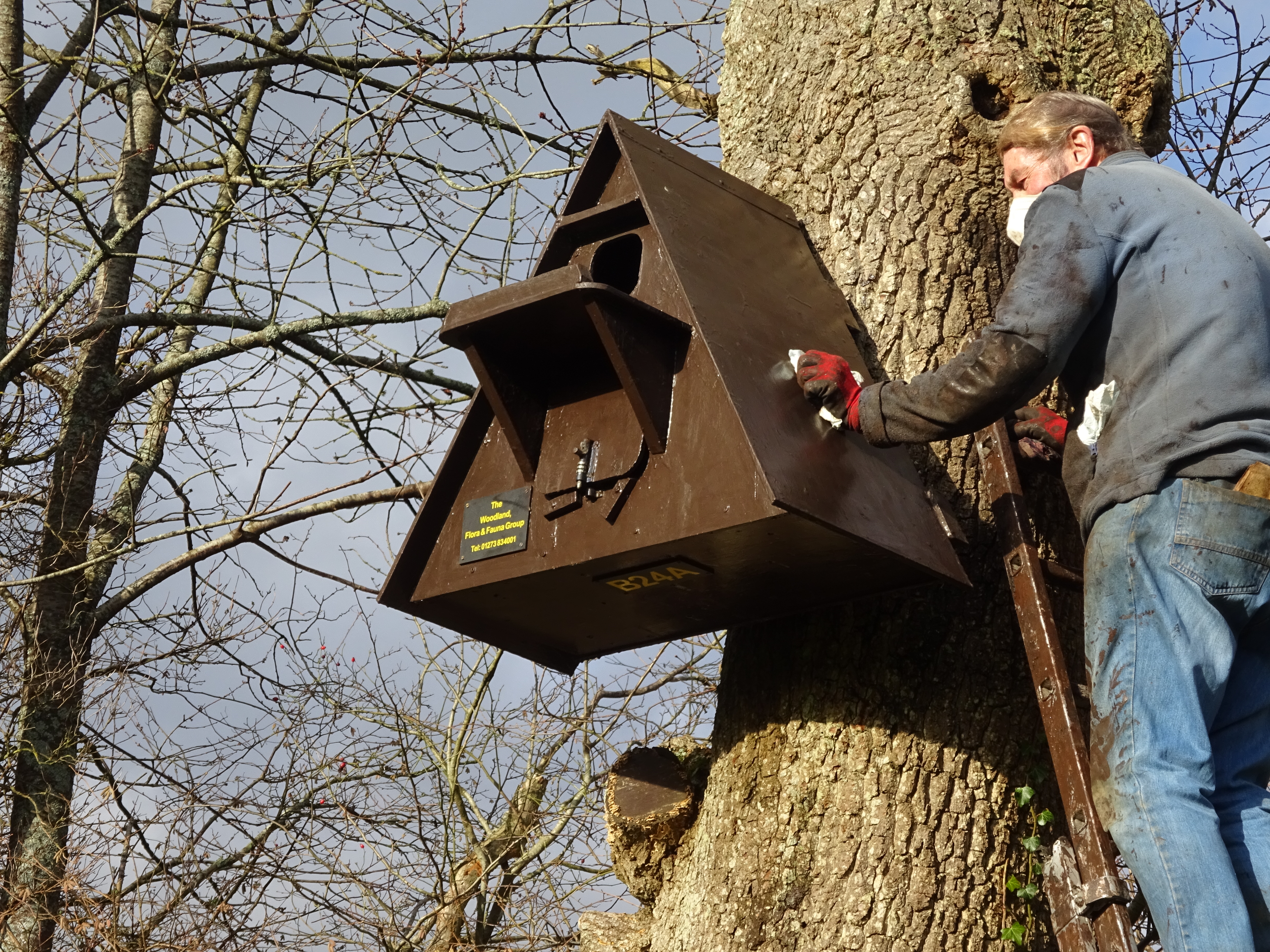 Any structural damage is repaired and repainted.
.
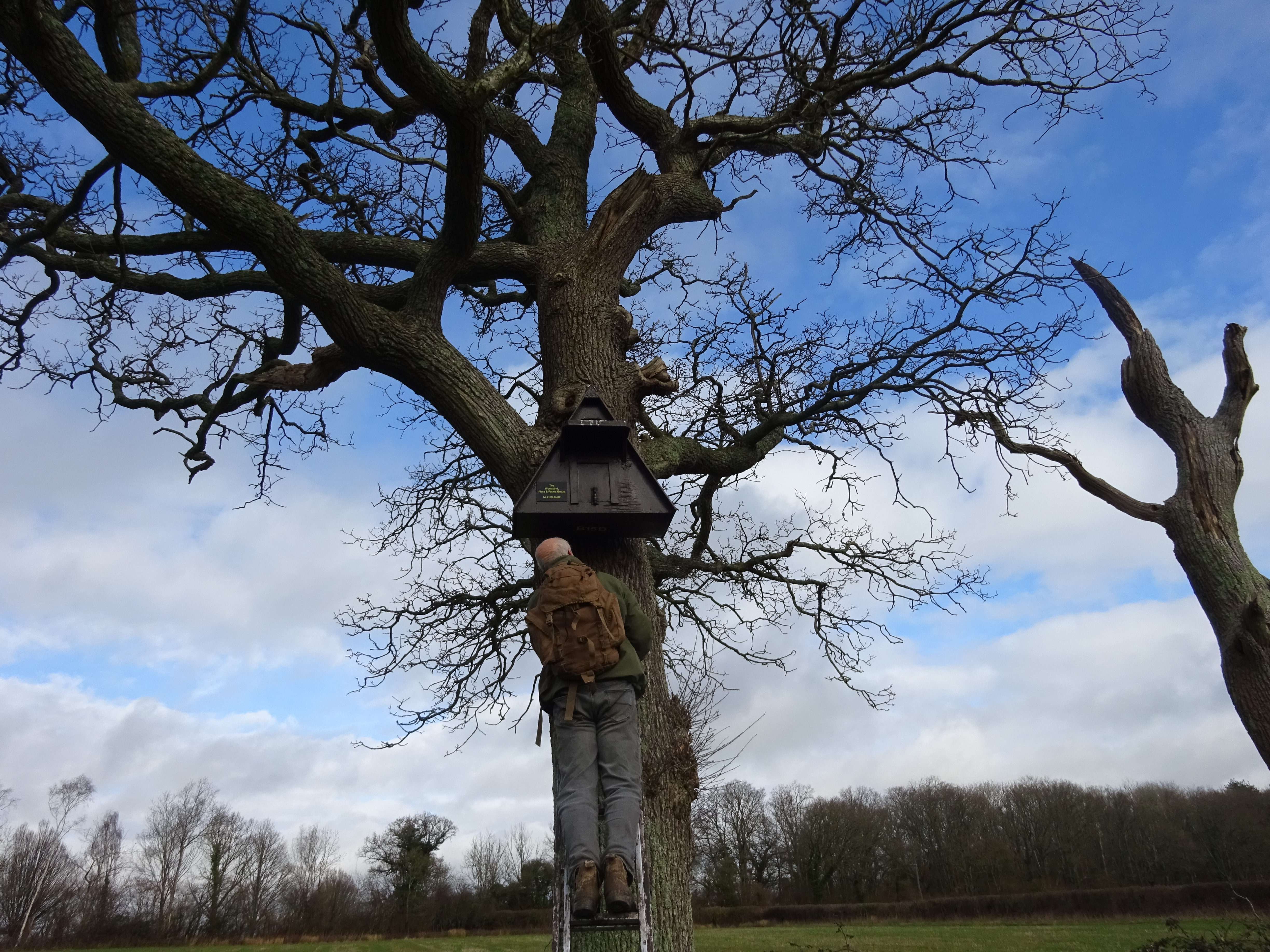 Some boxes like this one, were found to be too damaged to maintain.
.
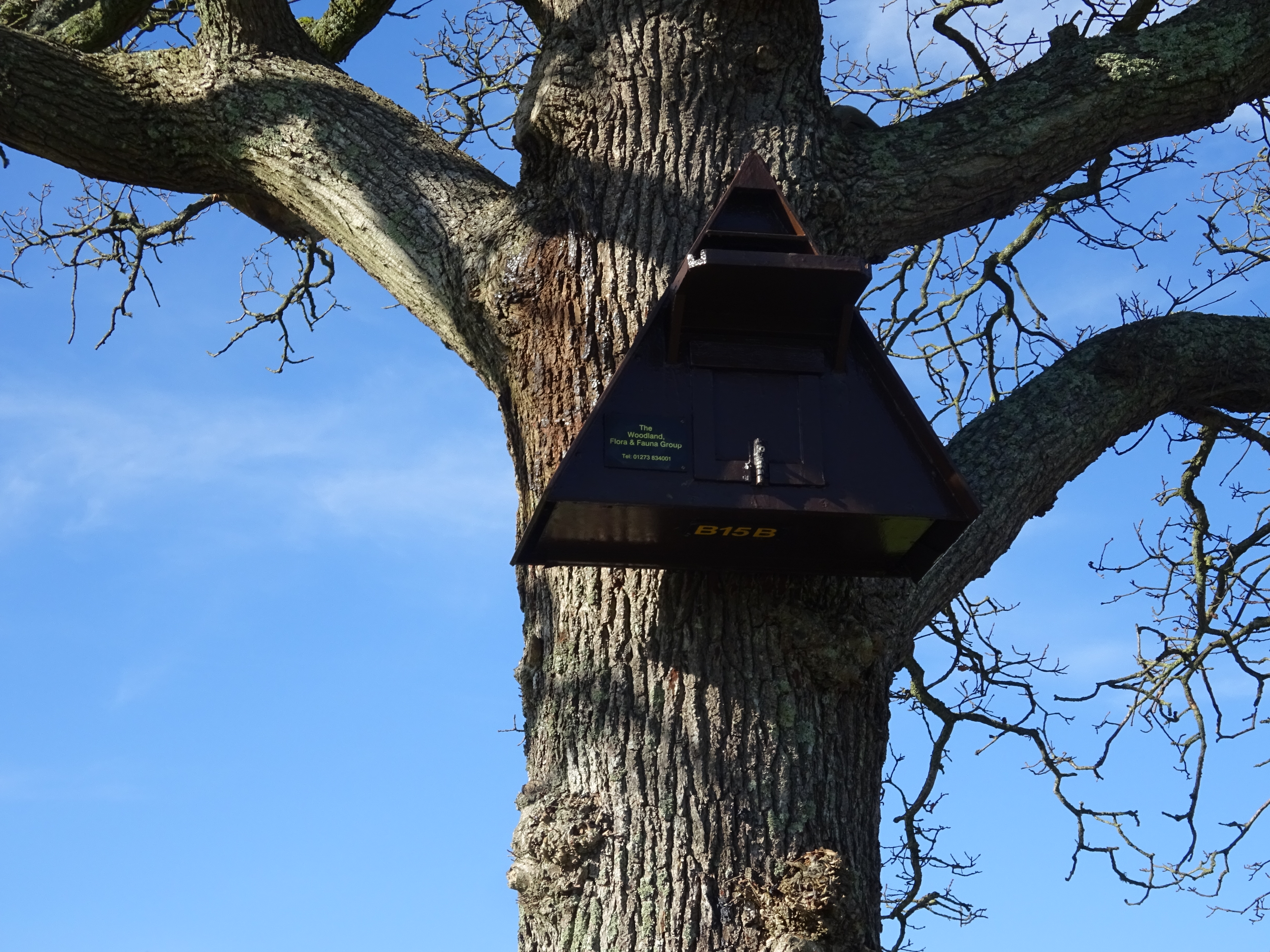 These had to be quickly replaced with a new box, as pictured above after erection, so that a every location provides a suitable, weatherproof, clean, and safe roosting environment for the owls residing in our conservation area.
.
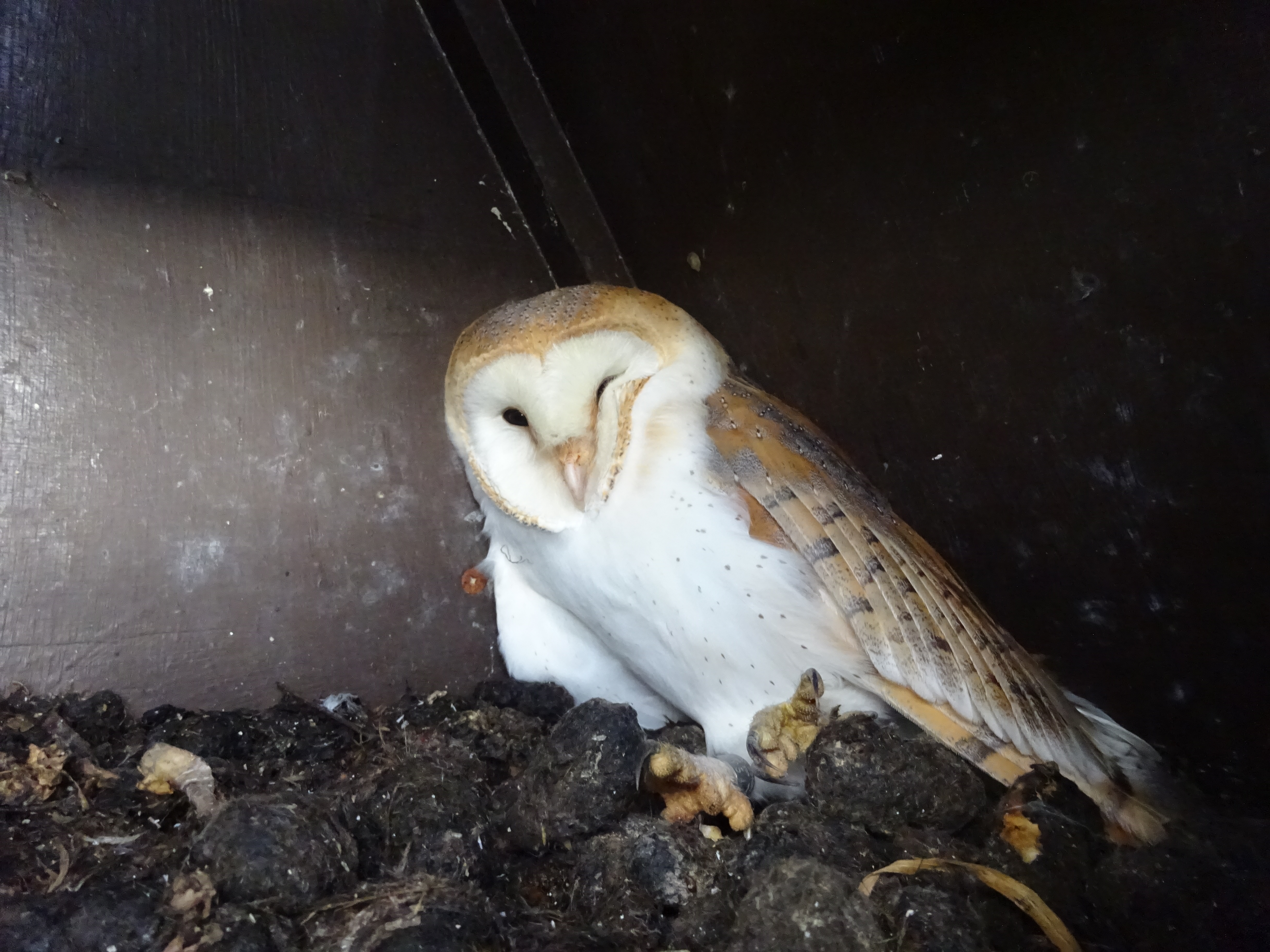 When completed we close the box and depart to the next one, to allow the owls like this beautiful female who was initially reluctant to move, to return.
.
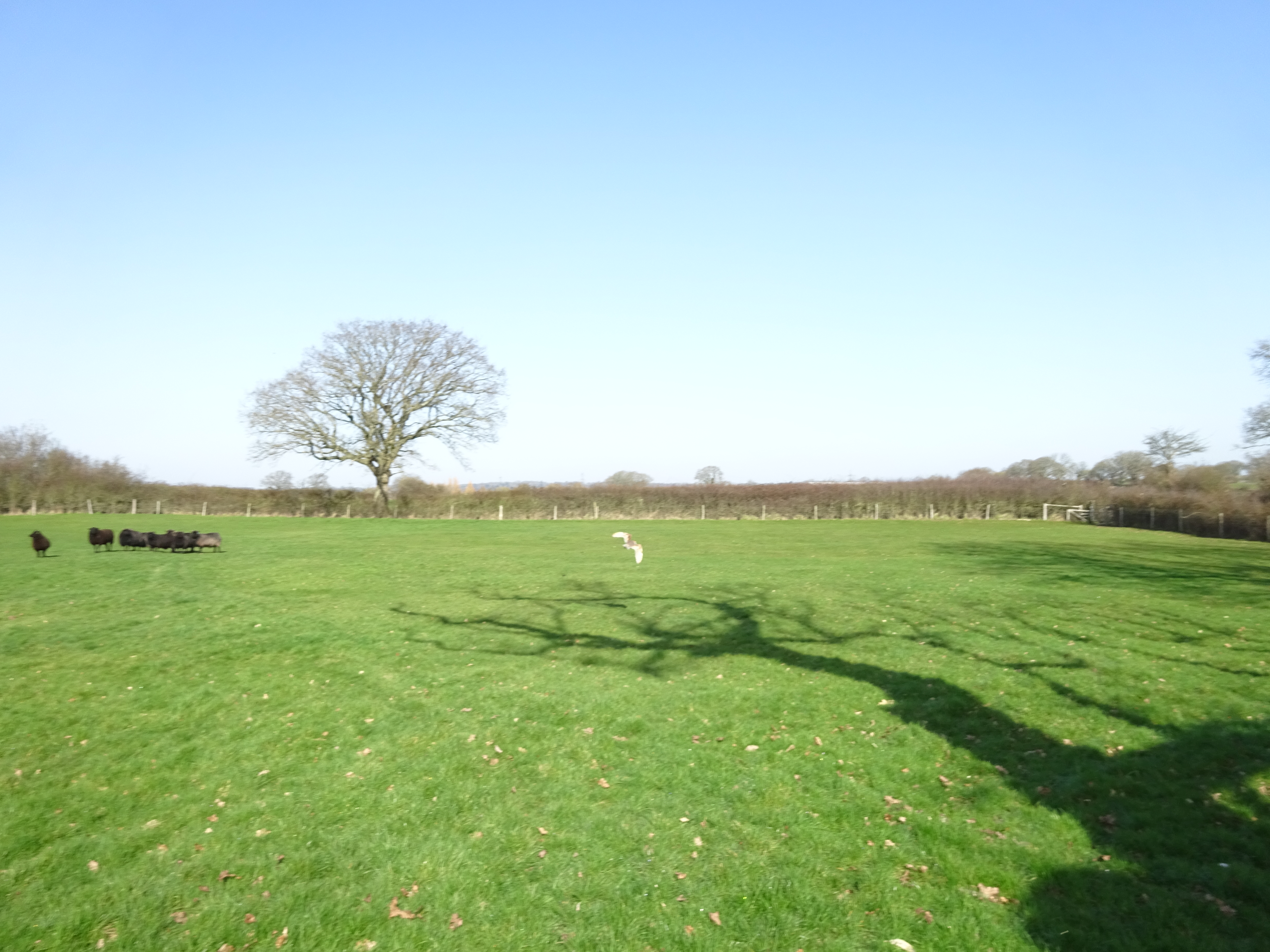 As she left, we were treated to one of the most rewarding sights experienced in our work, to witness a healthy barn owl gracefully flying across our local countryside. Their continuing welfare being the motivation that drives us on through the often daunting obstacles we have to navigate.
.
Somehow, despite the wet weather onslaught the winter unleashed and the difficulties encountered, we managed to complete all boxes before the onset of the breeding season, thanks to the time sacrifices made by our team of volunteers. We are very grateful for their effort.
Although the disturbance of these Schedule 1 protected owl species requires a permit to be held by the leading member of the team, the other members are regular volunteers who work hard to conserve the natural world they value so much. Without their valuable help none of this work could be undertaken.
We always welcome additional help from anyone who feels able to join us. The range of nature conservation tasks we undertake is wide ranging. The reward obtained as a result of our effort of striving to enhance the well-being of our local countryside and wildlife is considerable, so if the prospect of helping with us with our work appeals to you, please contact us via our website link.